At Northwest Electric Fest the top four in Mens Pro finished inside 25 seconds of each other across two days of racing, and third and fourth were separated by 1.4 seconds. A fumbled mount at the gate costs more than that on its own. Christopher Brady, who coaches on the USA EUC circuit and started ski racing at five, has one drill he recommends above all others for it. It needs no track, no cones and no space, and it is the most prescriptive thing in his entire coaching interview.
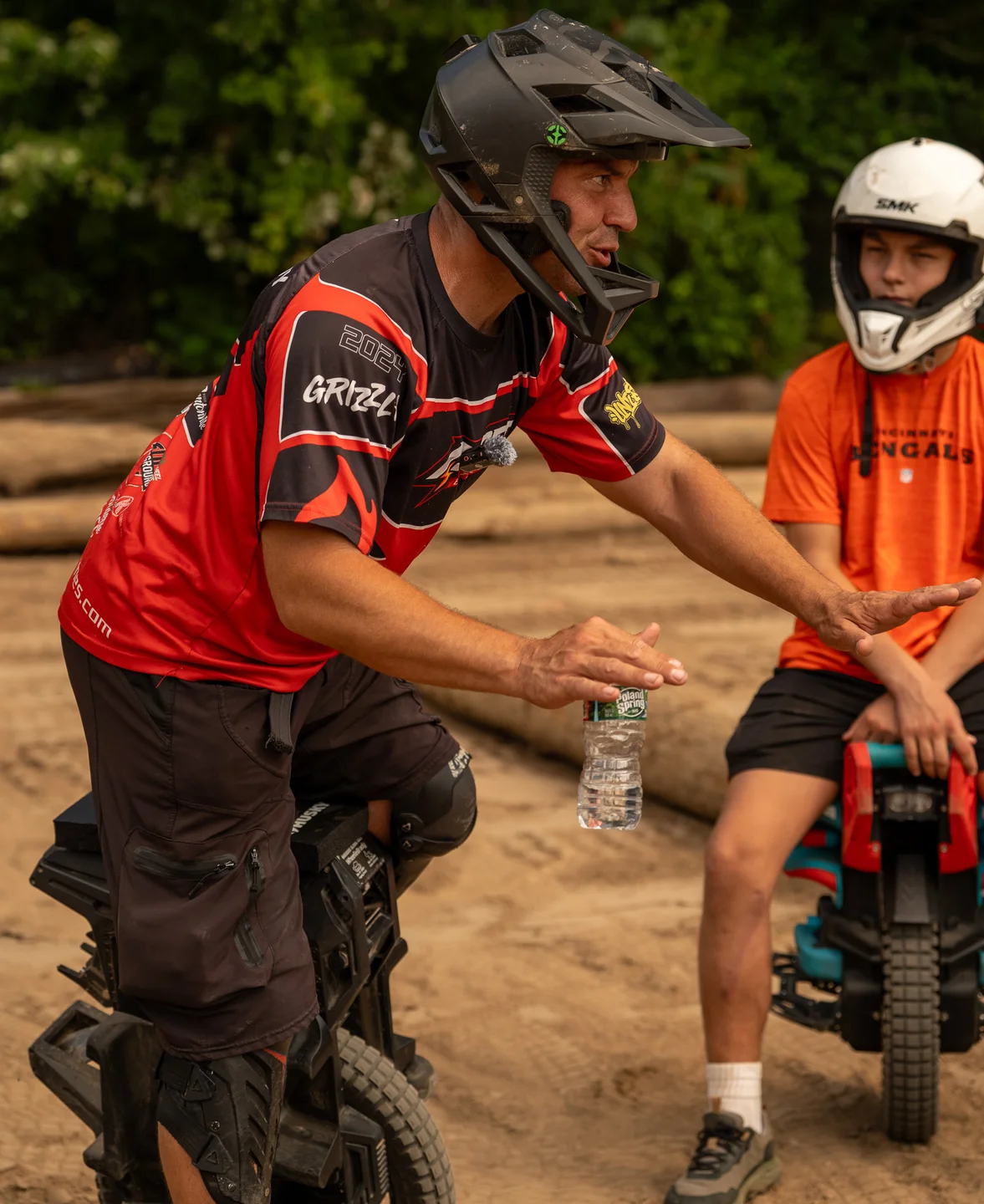
Christopher Brady gives race instruction to Emmett Minge and other riders at the mini Camp Amped at Wheel Life Rally in 2026.
What Is the Mount Drill?
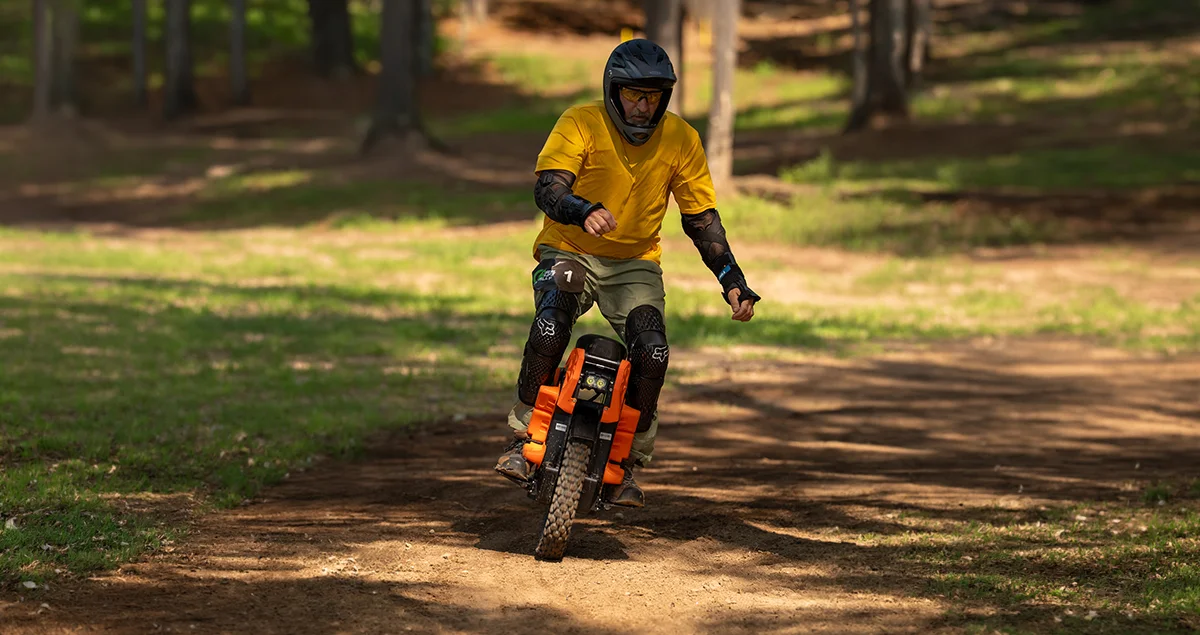
Standing still, both feet on the ground, mounting and dismounting one foot at a time without ever rolling anywhere. Brady recommends:
One of the things that I think is good for starts and stuff like training would be standing with two feet on the ground. The wheel in the middle. Put one foot up. Put the other foot up. So now you're both on the pedals, balance as long as you can, let the one foot come off. Lift it back up, put it back on, do the other foot and go left to right, left to right. That's the best drill for starts. Do that.
Read that carefully, because the detail people skip is the alternation. You are not practicing getting on. You are practicing getting on from either side, so the start does not depend on which foot happens to be nearest the pedal when the gate drops.
How Many Should You Do?
Twenty to thirty a day, every day, and he frames it as a habit rather than a session:
You do that 20 or 30 times a day. You won't miss a start ever. But every single day, just like some people do 10 push ups a day or something like that. You have to every day do at least 20 or 30 mounts in a row without moving. And then you will never miss a start.
That is a strong claim and he makes it twice in the same answer, so it is not a slip. The comparison to ten push-ups a day is doing real work: this is not something to do the week before a race, it is something that becomes background maintenance and then stops being a variable on race day.
What Should You Be Thinking About While You Do It?
Your hips, and only your hips. Everything else follows from where they are:
The thing that you're thinking about probably the most is your hip position in the start. So you want your hips from standing to riding to be in the same position. That way, your upper body isn't moving a lot to get into the position. You don't want to have a lot of movement getting onto the wheel. So wherever your hips are, that's where you should try to keep them until you're already going.
The reasoning is that any movement your upper body has to make to get into riding position is movement that happens after the clock starts. A rider whose hips shift as they step up has to re-settle before they can drive forward. A rider whose hips never move is already in the position they will race in.
How Does This Tell You Your Pads Are Wrong?
Because a mount you cannot repeat is usually a pad problem rather than a skill problem, and the drill surfaces it in your driveway rather than at the gate:
it's the whole point of this drill to figure that out, where to get your pads right. Because doing that drill will help you get used to where your pads are. And if they're not in a good spot for you to get in and out, you can adjust them there.
This is the part of the drill that quietly pays for itself. Pad position is normally set by feel on a ride and then never revisited. Twenty mounts in a row will tell you within a minute whether your foot is finding the same place every time, and you are standing next to your tools when it does.
The corollary is that tight pads are not automatically wrong:
You should get good at slamming your foot in, even if it's tight. Just slam it in every time, it'll go in there and you just got to get used to it. Muscle memory.
Where Should You Be Looking on the Start Line?
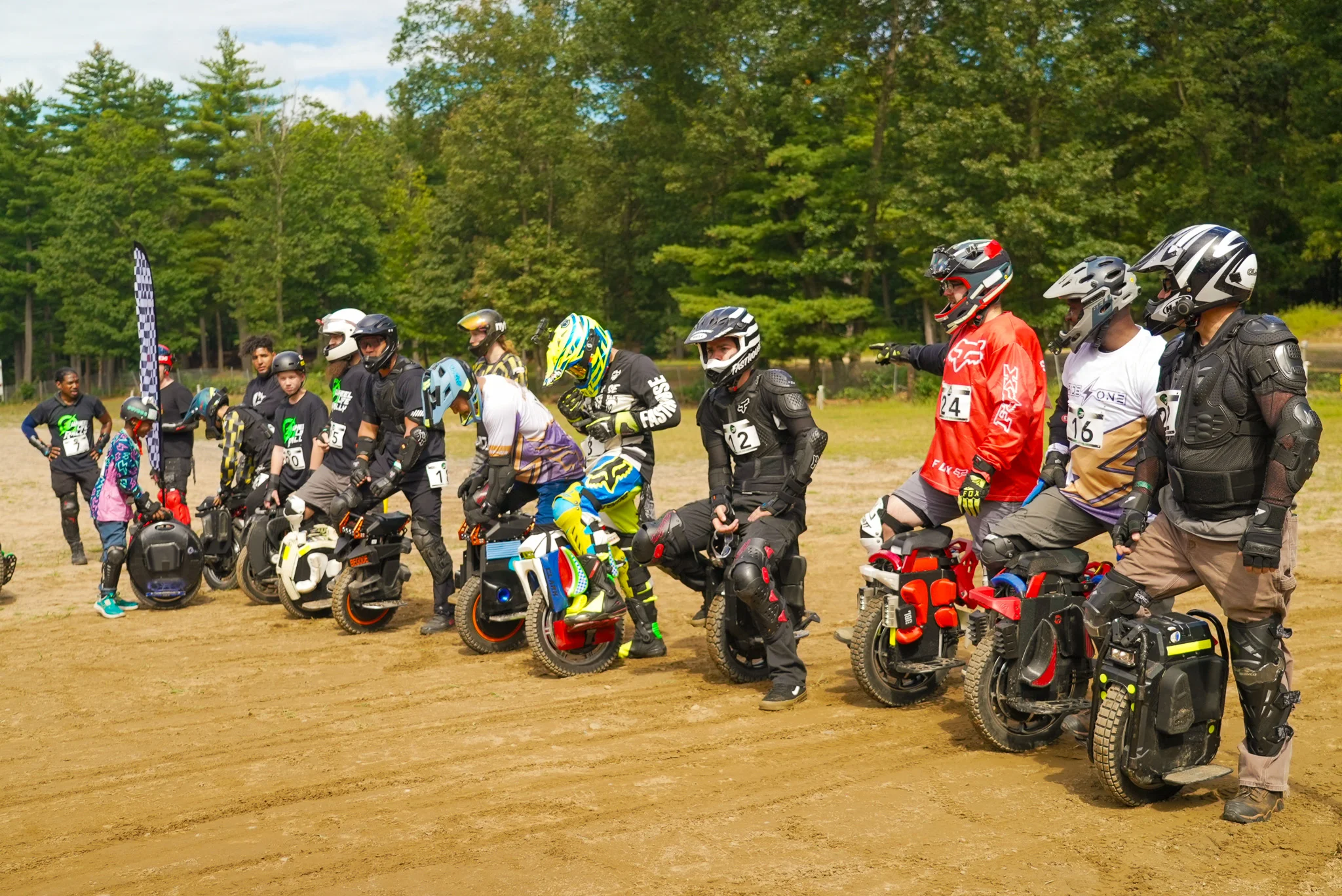
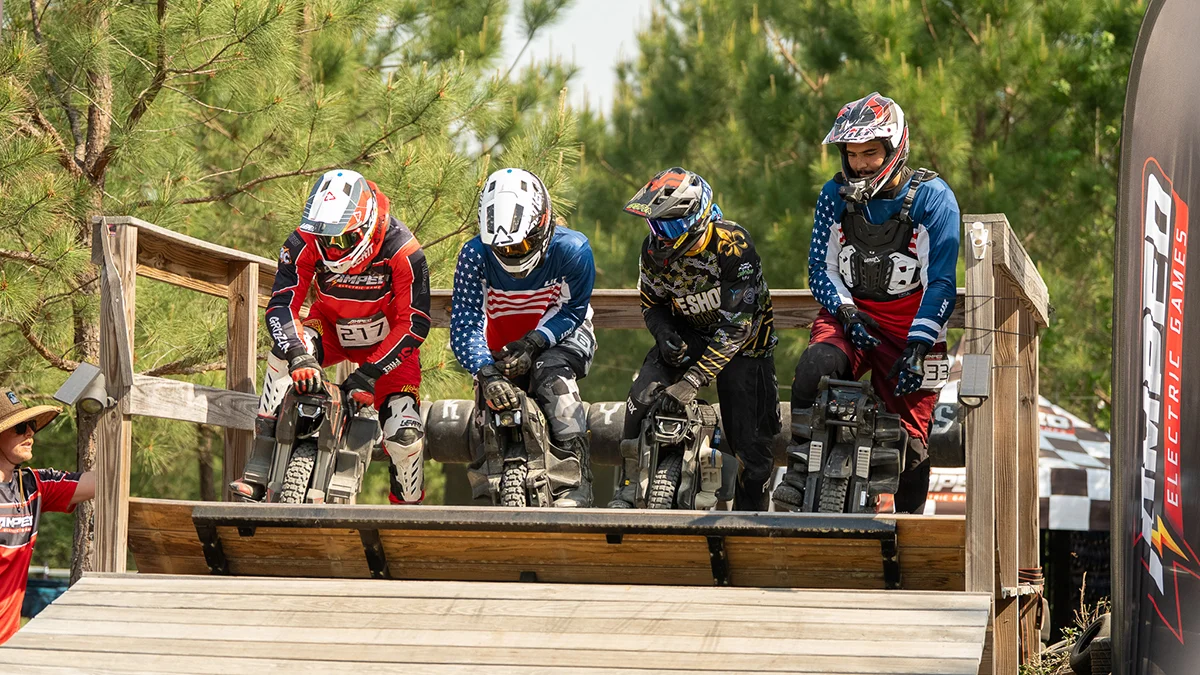
The starting line at Wheel Life Rally 2023. Photo credit Seth Johnson (USA EUC).
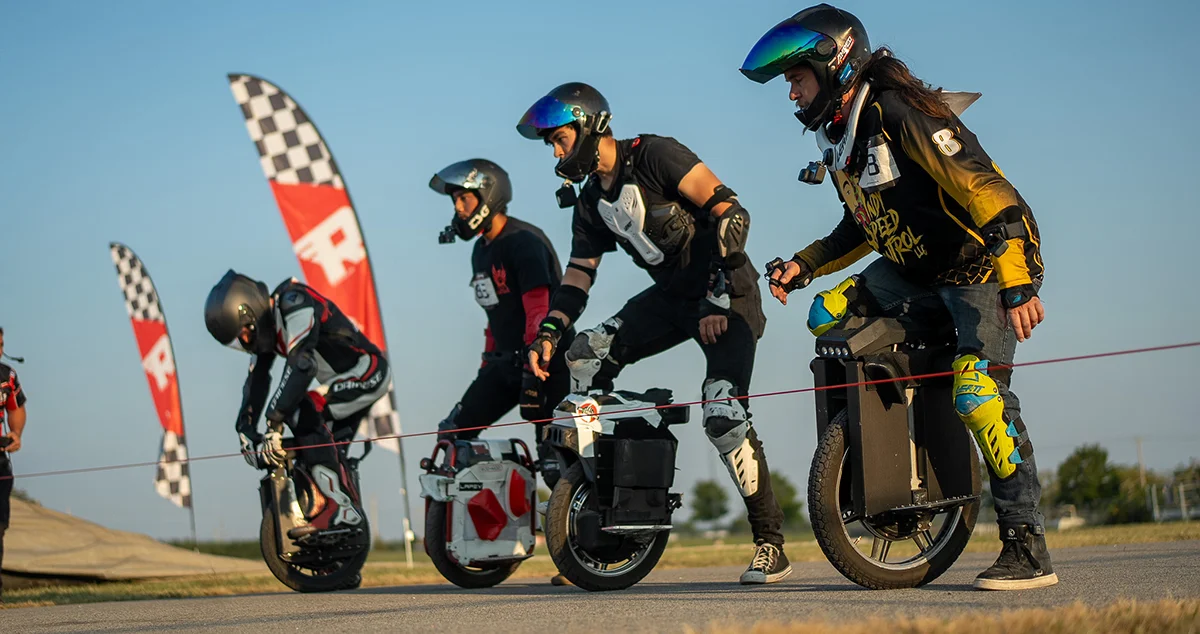
Forward, and Brady is emphatic that the riders beside you are not your problem. He describes the start of a tight race as an intimidation contest:
A start like this gets really dirty. It's kind of like the peacock effect. Or you want to be bigger than the other animals around you.
The rider he holds up as doing it correctly is Joe "Cooler Joe" Greska, who races on old-generation and hand-me-down wheels and has still reached second on the USA EUC scoreboard:
Versus like if you watch someone like Cooler Joe when he takes off. He's not looking at anyone, he doesn't care about anyone around him. He just launches.
Watching your competitors on the line is the most common start error Brady describes, and it shows up in the hands and the head before it shows up in the wheel. A rider whose attention is sideways accelerates late and then spends the first corner recovering. The mount drill removes the excuse for looking down at your feet, which frees you to look where you are going.
What Does Good Look Like?
Four checks, all of them things you can confirm at home before you ever pay an entry fee. You can mount from either side without looking. Your hips finish where they started. Your foot lands in the same spot on the pad every time, hard, without hunting for it. And you can hold the balance on both pedals long enough that stepping off is a choice rather than a save.
When all four are true, the start stops being a thing you get through and becomes a thing you use. That is the same argument as the rest of Brady's coaching: repetition until race day is unremarkable, so that the only variable left is how fast you actually want to go.
You can read more coaching tips and tricks in the news section tagged "Training".