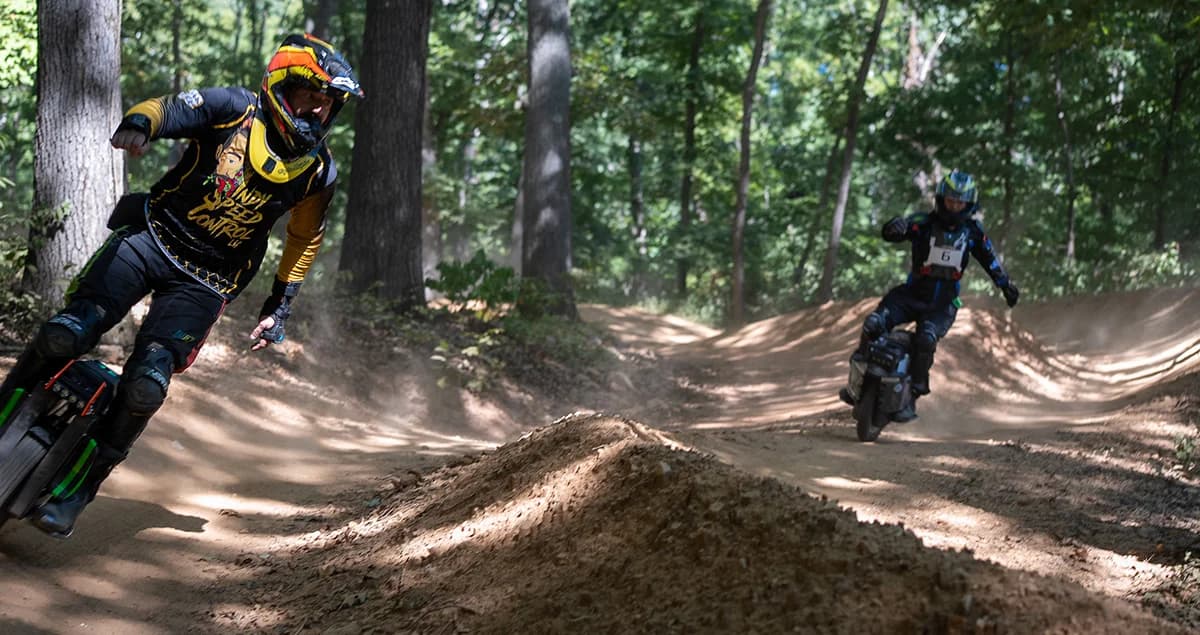
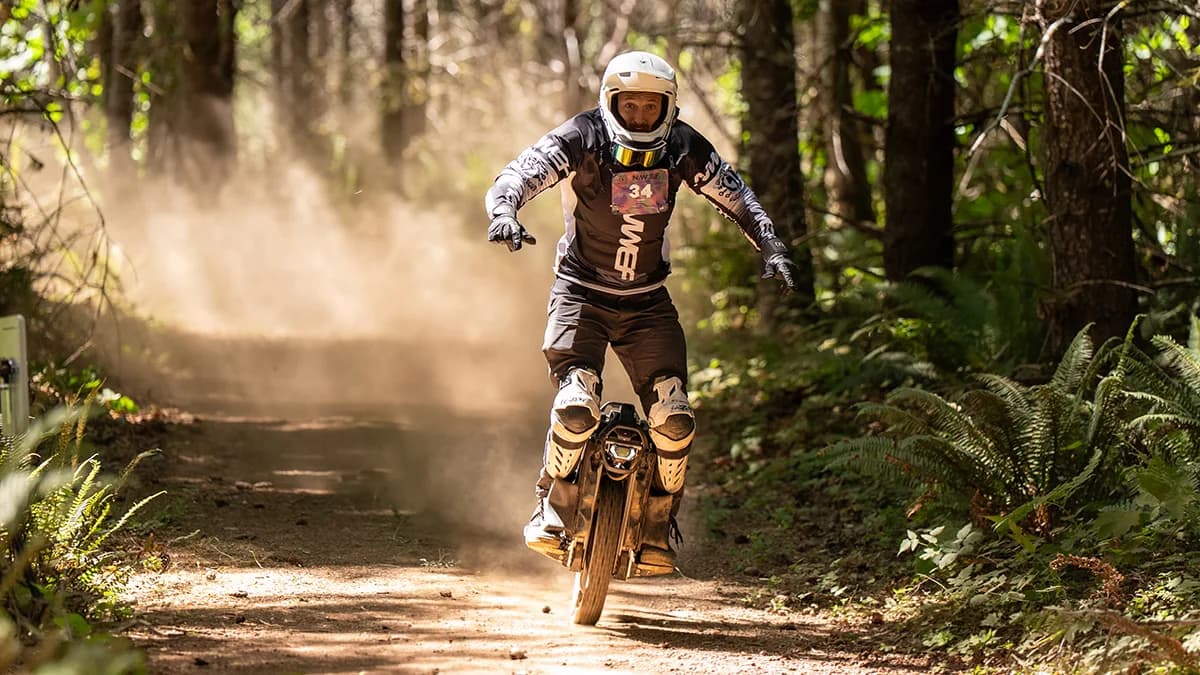
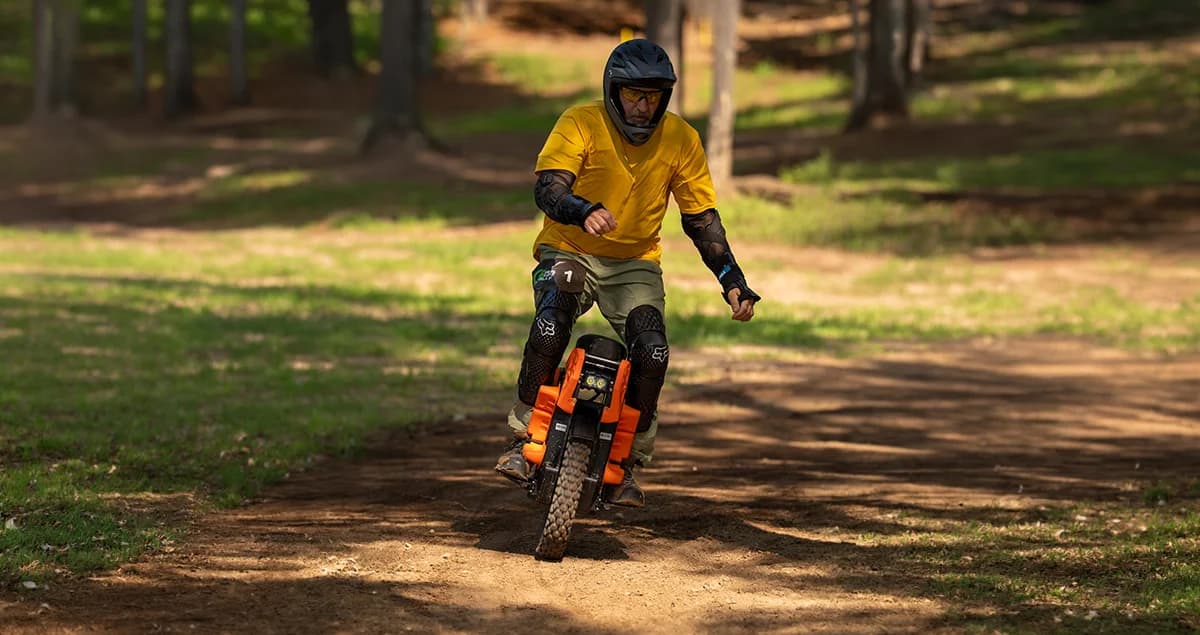
At Northwest Electric Fest in July, the top three in Mens Pro finished within 24 seconds of each other over two heats and two days. Joshua Fagerness won in 10:11.700, Zac Darnell was second in 10:17.200, Justin Davis third in 10:35.300. They rode the same trail on the same weekend, and by one rider's account the tire pressures involved differed by 16 PSI.
There is no correct number in this article, because the riders who win races do not agree on one. What there is instead is four working theories, the reasoning behind each, and a way to find out which one your wheel and your weight actually want.
What follows is what riders on the USA EUC circuit do, reported from interviews. It is not instruction, and none of it is tuned to your wheel, your terrain or your experience. Change one thing at a time, test it somewhere a fall is cheap, and wear the gear.
What Pressure Do the Fastest Riders Actually Run?
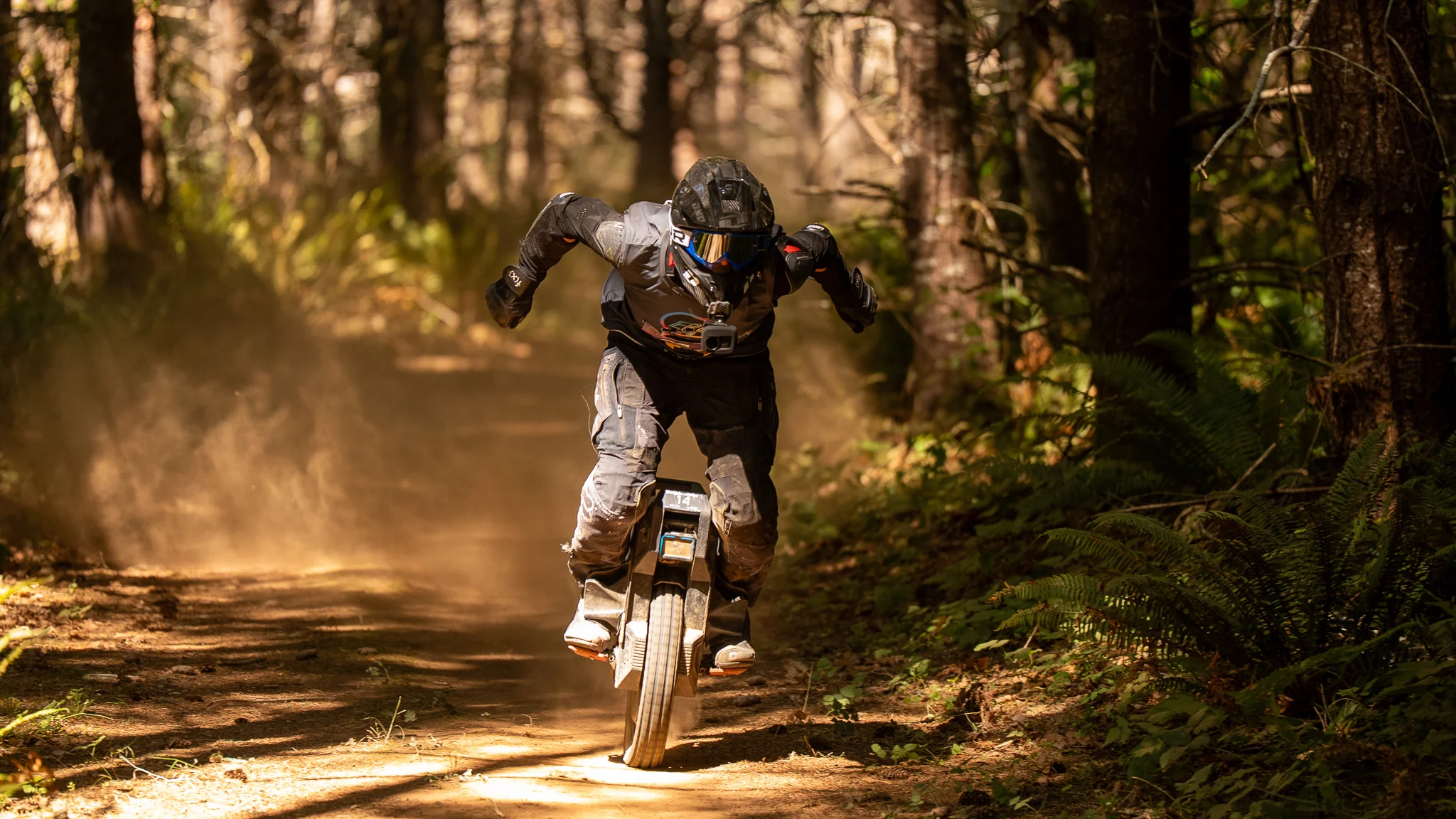
Zac Darnell crossing the finish line on his low-psi Begode X-Way. Photo credit Seth Johnson (USA EUC).
Zac Darnell finished second in Mens Pro at Northwest Electric Fest and has been coming to that event for five years. He runs about 19 PSI on a Shinko 241 off-road, which is low enough that he volunteers the word risky before anyone else can.
In his own words:
I keep my PSI around 19 on courses like this. It's risky but you get maximum traction especially when you're trying to go as fast as you possibly can. You need as much contact with the ground as possible.
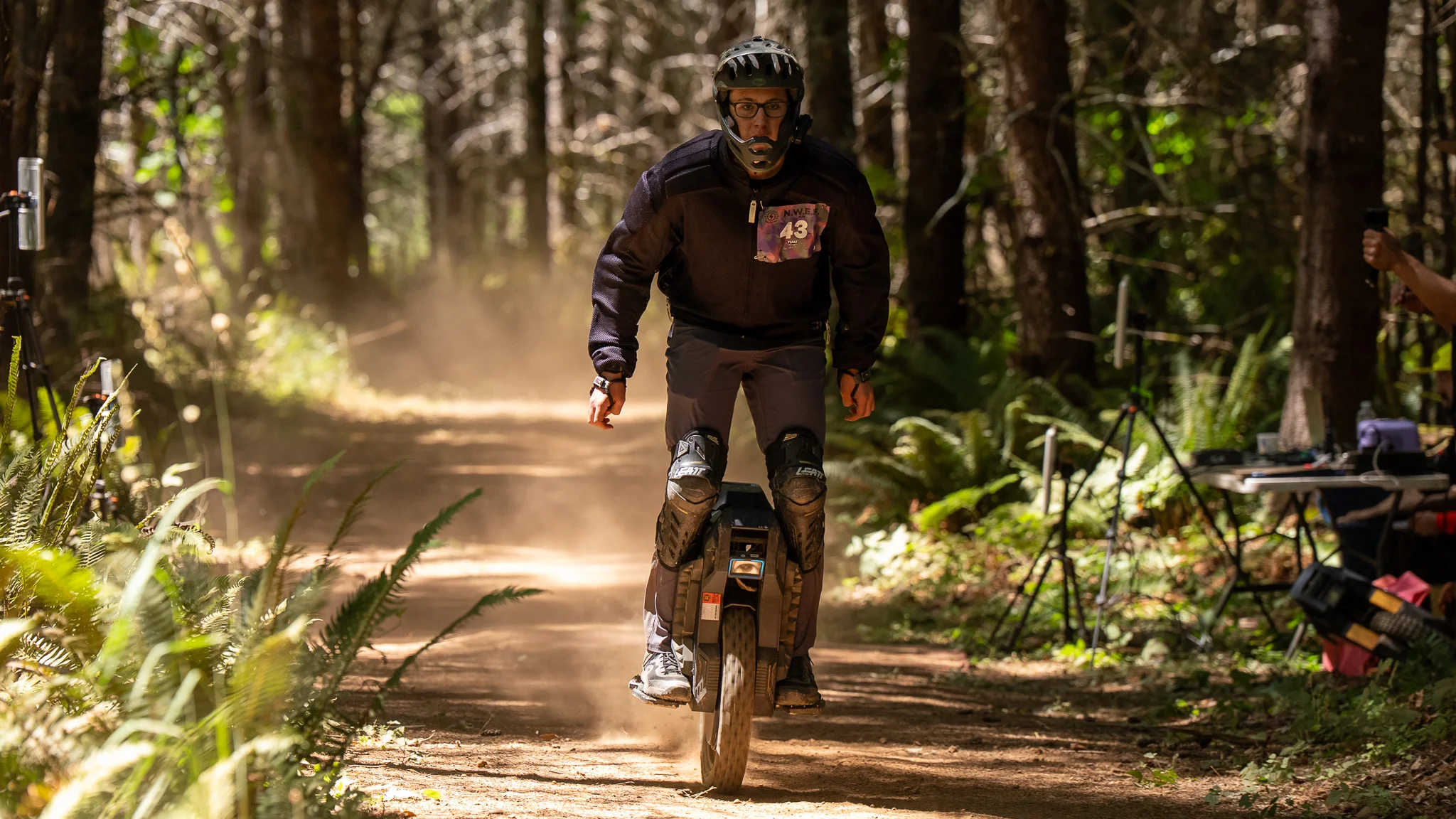
Archer Chew crossing the finish line on his high-psi Begode X-Way. Photo credit Seth Johnson (USA EUC).
Archer Chew, 16, who finished second in Teen Boys at the same event on a Begode X-Ray, sits 16 PSI higher:
I consistently ride it 35 psi
Nineteen and thirty-five, at the same race, on the same dirt. Both riders finished. Neither is wrong in any way that a magazine could settle.
Why Does Lower Pressure Give More Traction?
Lower pressure lets the tire deform around the ground instead of skating over it, which puts more rubber in contact with soft dirt and turns more of your throttle into forward movement rather than spin. Darnell explains the mechanism rather than just naming a number, and his version is the one mountain bikers have used for years.
So having less PSI in your tire means your tire is going to squish more. Which means you're going to have more surface area. Which is exactly what you need on soft terrain.
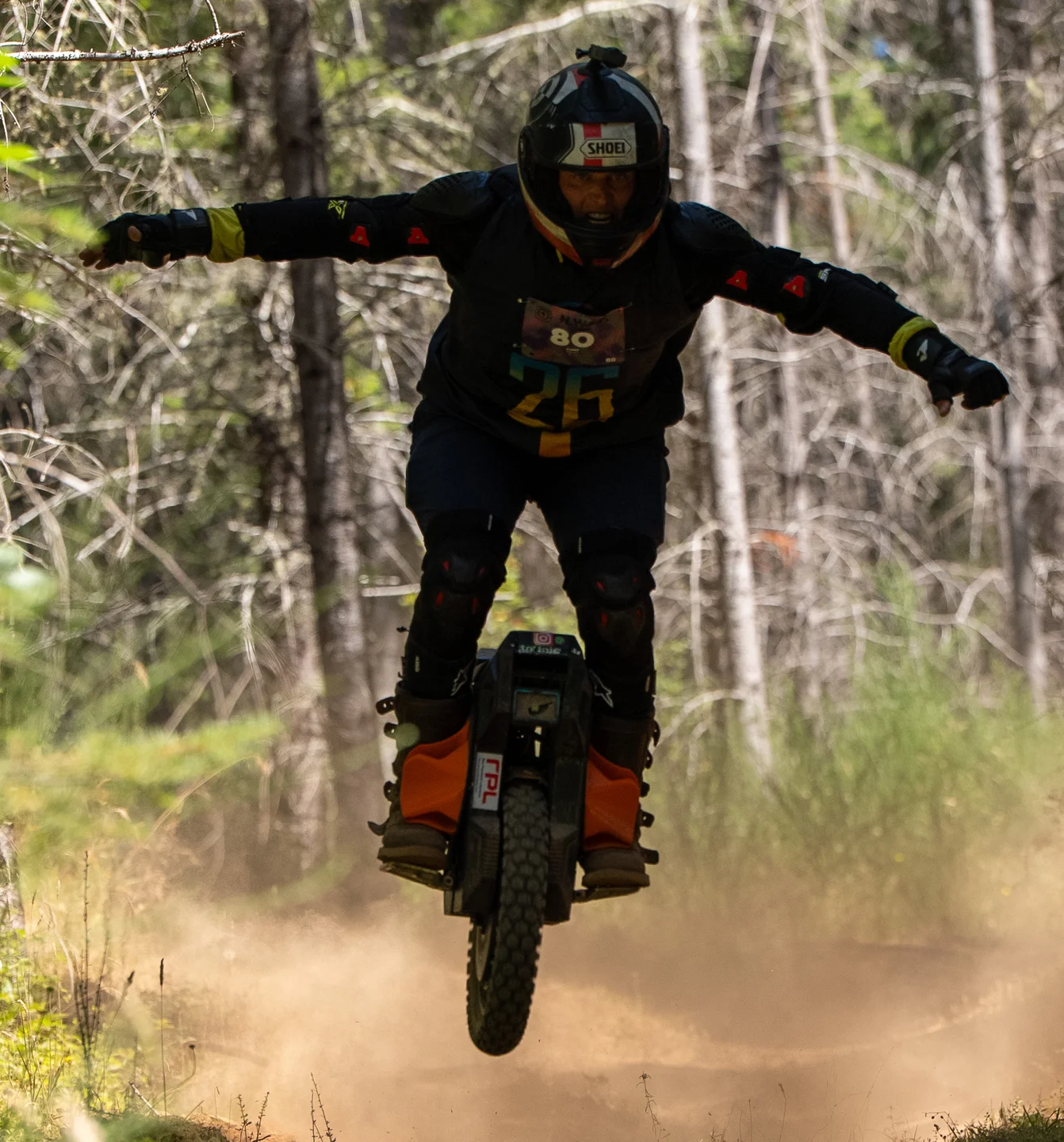
Justin Davis catching air during qualifications, a risky move with a low-psi tire. Photo credit Seth Johnson (USA EUC).
Justin Davis, third in Mens Pro at the same event and a former motocross racer, arrived at the same conclusion from the other direction, and mentions the specific place it paid: the climb.
I lowered the PSI for the racing definitely give myself more traction especially when we're going up the hill
Two riders, independently, on more contact patch meaning more grip on soft ground. That is as close to consensus as this topic gets. Darnell is also honest about the cost, which is why he calls 19 risky: a tire with less air in it has less between the rim and a rock, and a pinch flat ends a race as surely as a crash.
What Does Christopher Brady Tell Riders to Try First?
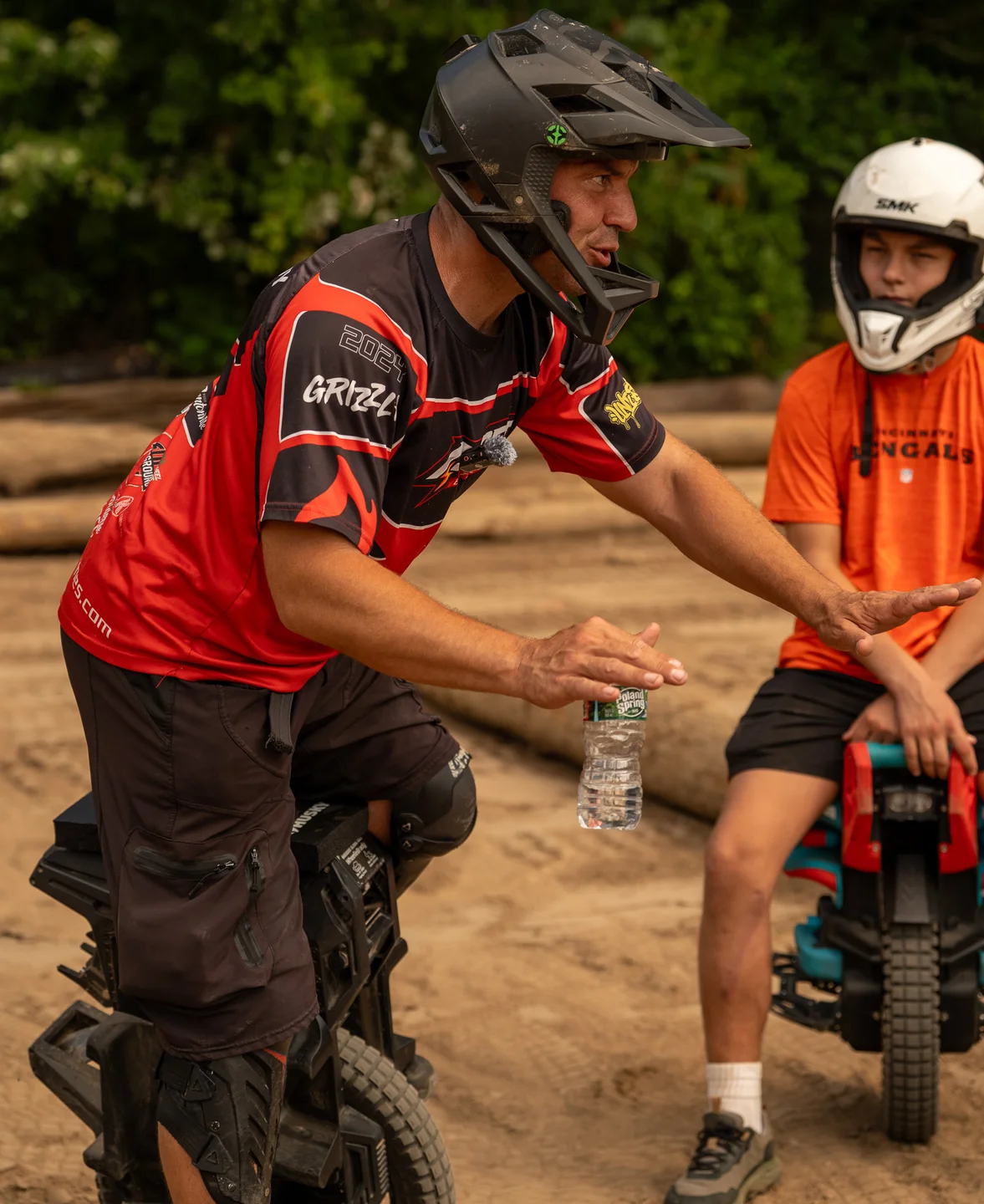
Christopher Brady, Camp Amped coach recommends trying different PSI levels before the race. Photo credit Seth Johnson (USA EUC).
Brady, who coaches on the circuit and came up through ski racing, does not answer the question with a number at all. He answers it with an experiment: ride one end of the range, then ride the other, so that you learn what your own tire feels like when it is wrong instead of copying a figure off a forum.
So I would say if you haven't tried 15 PSI, try 15 PSI. Don't hit any rocks. But you'll be all right riding around at 15 PSI. I wouldn't go too fast carving turns and stuff. But for off-road, 15 PSI, you may like it. And find the difference.
Then the other end, deliberately too far:
You also want to try 40 PSI just so you can feel what it's like to have too much air in the tire.
This is the most useful thing in the article for a rider starting out. Two rides at two extremes teaches more about what your wheel does than any number copied off a forum, because the thing you are trying to learn is what the tire feels like when it is wrong.
Should You Set It Once or Adjust It for Every Race?
This is the second disagreement, and it is more useful than the first. Some riders tune constantly. Chew set his pressure once with his father when the wheel was new and has not touched it since, and he still finished second in his class at a national event after riding six events this season.
Both approaches are on the podium, which suggests the honest answer is that consistency has value too. A rider who knows exactly what their wheel does at one pressure is better placed than a rider who changes three things before every heat and cannot tell which one helped. Darnell, who does tune, is candid that the sport does not have this figured out yet:
I usually reference the mountain biker dudes just because their sport's been around for so long and there's so many people that have spent tons and tons of time figuring out the proper mechanics to it all.
And on how far off a settled answer is:
So I think maybe a year or two will actually have a proper science to it.
What Should You Check Before a Race?
Whatever number you land on, the failure that actually ends races is not being a few PSI off. It is not checking at all, and Brady is blunt about what that costs.
Well, if you have a flat tire, you're in trouble. I mean, Cooler Joe, he'll probably do all right. But I don't know anybody else that will finish on a flat tire. You want to have your equipment as maintained as you can. So go through it before the race.
A workable protocol from everything above. Start where your tire is now and write the number down. Ride your usual loop, then drop 5psi and ride it again, then another 5psi and ride it again, on ground where a slide is cheap and away from rocks at the low end. You are not looking for a favorite yet, only for what too little and too much feel like. Then move in smaller steps between them, changing one thing at a time, and keep the number written down against the terrain you rode. Bring a gauge and a pump to every race, because pressure moves with temperature and altitude, and a number set in a garage in June is not the same number at a trailhead in Bentonville in October.
Camp Amped runs September 28 to 30 with Brady coaching, and gauges and pumps are provided, which makes it a reasonable place to do this work with someone watching.