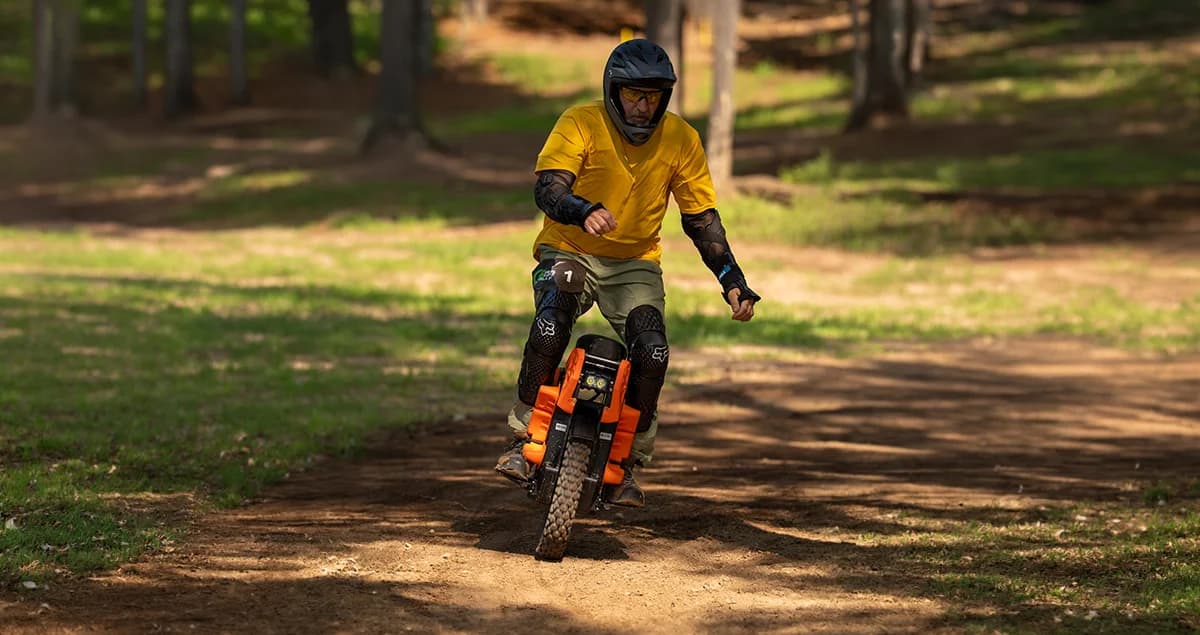
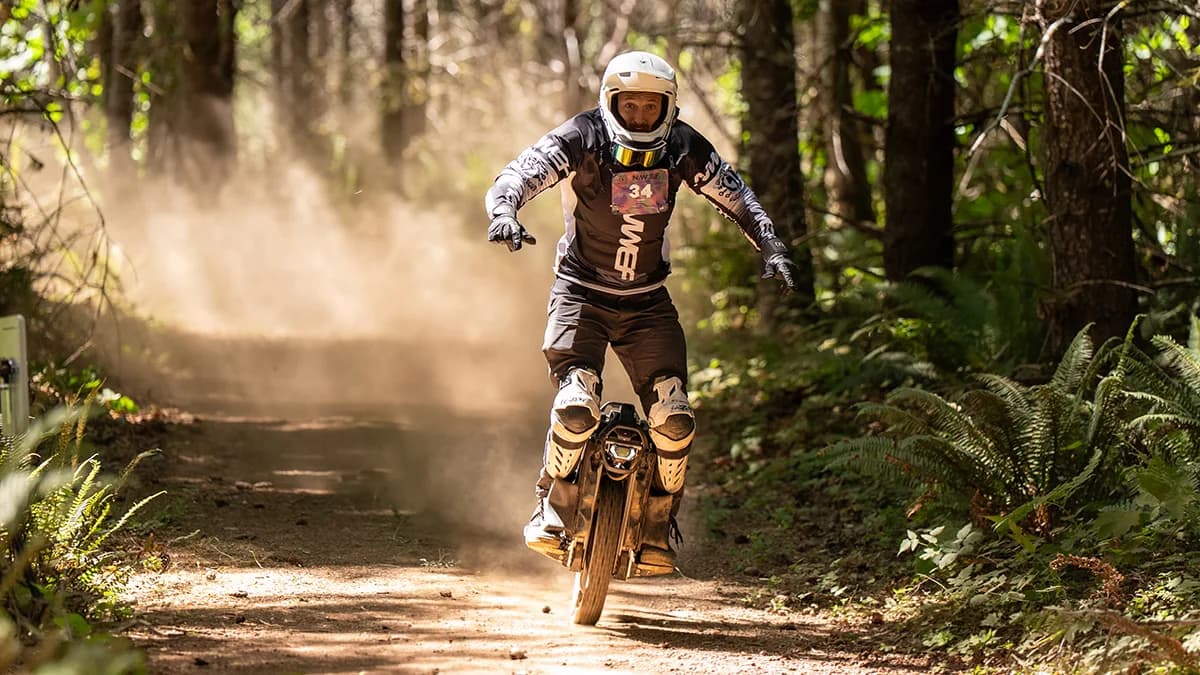
Camp Amped puts ten EUC riders on the Amped Electric Games grounds in Bentonville, Arkansas, for three coached days, September 28 to 30, 2026, on the same course that hosts the season finale five days later.
The coaches are Justin Davis and Joshua Fagerness. Neither is coaching from the sidelines of the sport. Fagerness currently leads the USA EUC national Off-Road standings with a 0.00 in Off-Road Pro races this season. Davis leads the national Enduro standings with a 0.00 average . Both are currently ranked first nationally in their respective categories while Camp Amped remains open for registration.
Those numbers are not a preseason projection. Fagerness has started four Pro races in 2026 and finished on the podium in every one, winning three: Let It Ride 5 in March, Seek 'n Shred ShredFest 6 in May, and Northwest Electric Fest in July.
Davis has also been at the front of the Pro field throughout the season, including wins and podium finishes at King of the Motos, Let It Ride 5, and Northwest Electric Fest. At Northwest Electric Fest, he finished third among 11 Pro riders, just 1.4 seconds ahead of fourth place. He currently sits third nationally in Off-Road, behind Fagerness and Zac Darnell.
What Justin Davis and Joshua Fagerness Bring to the Table
Fagerness, who races as Yeetereuc, has become one of the defining riders in the current Off-Road field. He beat Zac Darnell, the standings' current number two, by 16.70 seconds at ShredFest 6 and by 5.5 seconds at Northwest Electric Fest. At Northwest, Darnell took one of the two counted heats by a single second before Fagerness closed out the overall win.
Those margins point toward what Fagerness can teach: cornering entry speed, line choice, and race craft under pressure. Davis, who has raced against him throughout the season, has described Fagerness's cornering technique as a significant part of that advantage. He enters corners faster than much of the Pro field and carries the wheel through the turn rather than relying on the more conventional approach of braking heavily and setting up before the corner.
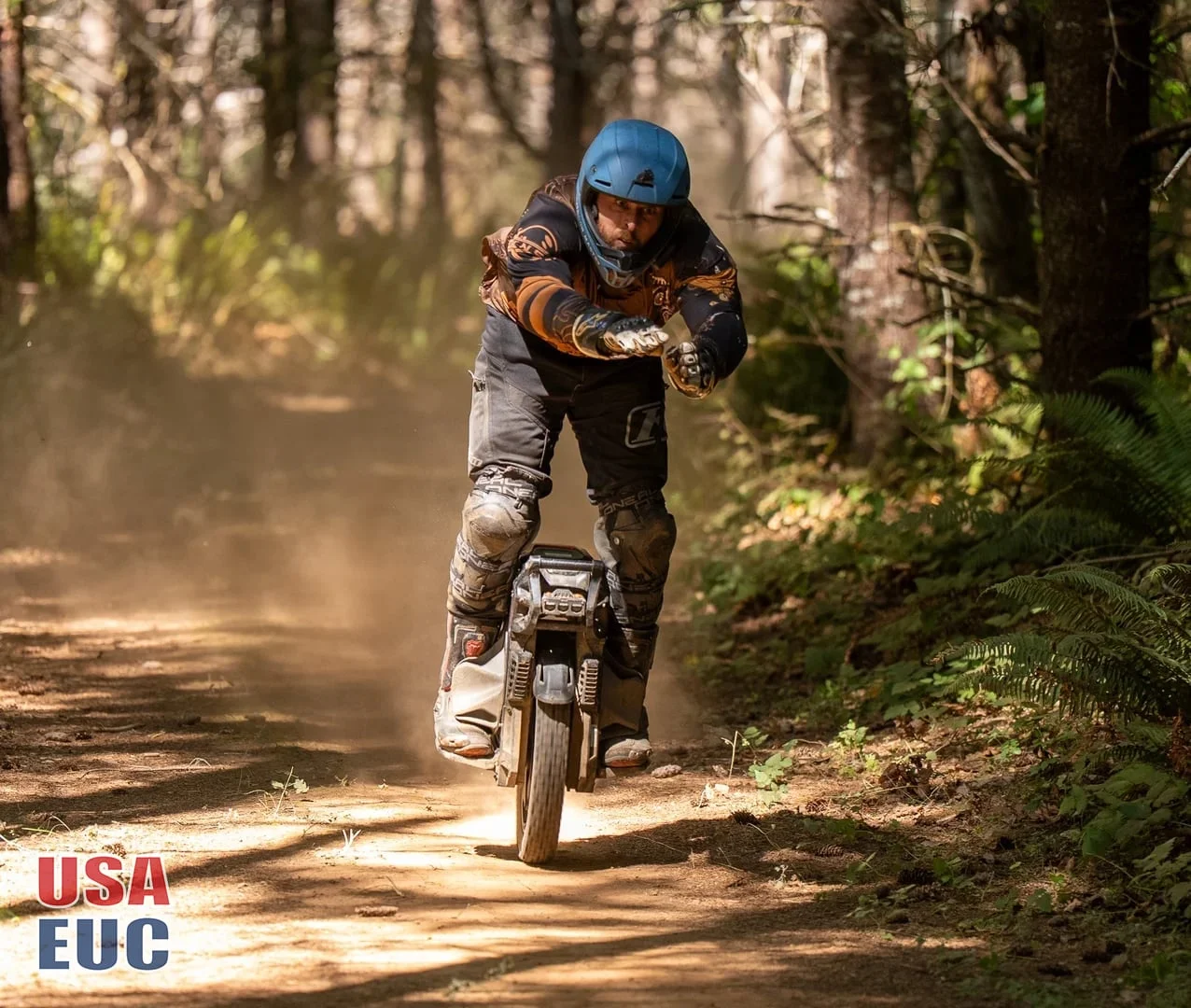
Davis, who rides as MotoUnicycle, brings a different emphasis: consistency, preparation, and adapting a setup to the terrain. He races a 168-volt Begode X-Way and treats preparation as part of racing rather than something that begins when race week arrives.
"The best people who show up are super competitive, and you're going to have to ride outside of your comfort zone if you want to win one of these," Davis said.
The purpose of Camp Amped is not to hear that résumé. It is to have both riders explain, on the ground, what produced it.
What You'll Actually Learn on the Bentonville Course
The three days are built around the specific pieces both coaches identify as meaningful in racing. It is not simply three days of riding faster.
Line choice and cornering come directly from the techniques Fagerness has developed in competition. Riders work on entering corners with more speed, carrying momentum through turns, and choosing lines that preserve speed rather than forcing unnecessary braking.
Body position and terrain reading are part of Davis's approach. His preparation changes according to the terrain in front of him rather than relying on one setup for every course.
"I lowered the PSI for the racing, definitely give myself more traction, especially when we're going up the hill," he said of adjusting for the climb at Northwest Electric Fest.
Race craft and speed management are another part of Fagerness's approach. At Let It Ride 5, his race strategy was based on recognizing that fighting through traffic could cost more time than it gained. Getting out front early and holding the line became the plan.
Consistency is the same idea extended across an entire lap.
"If you can hold trail pace, if you can hold race pace and not make a mistake, just like when you're coming down the mountain on any mountain bike trail and you're coming down it, there's a trail speed," Fagerness said.
Riding under pressure gets its own attention because the margins in a close race can be extremely small.
"So many mind games when you actually come out here to race," Fagerness said. "That edge is so fine. It's crazy. One little slip up, one little anything and it's over."
Race preparation is another area where Davis takes a deliberate approach. He trains around whatever is causing problems during a long race rather than simply pushing through it, then backs off during the week before an event rather than trying to build fitness at the last minute.
"I'm not in as much pain," he said. "I'm training a lot."
Fagerness makes a related point about the physical floor a rider needs before technique can make the difference.
"You have to be more of an athlete than you are dirt bike rider."
Ride, Film, Review, Correct, Repeat
This is the structure that makes the three days different from simply riding the Bentonville course with faster riders.
Every day follows the same basic loop: ride, film, review, correct, repeat.
Riding sessions are recorded on track, and each afternoon closes with a video classroom where Davis and Fagerness break down the day's footage and establish what each rider should work on the following morning.
There is no timed racing at Camp Amped. The measurement is the footage.
The reason video matters is straightforward. A rider at speed, mid-corner or mid-descent, is reacting rather than observing. It is difficult to know exactly where time was gained or lost while riding.
Fagerness's own experience at Let It Ride 5 illustrates the point. He led for part of the race but did not know how close the other riders were until he watched the footage afterward.
"I had no idea how close they were anywhere in the race," Fagerness said. "I thought the S-corner in the middle was where I had the advantage. I was like, oh, I got them. But I look back at the video, that's where they were actually catching me."
That is the value of filming. A rider's perception of where they are gaining or losing time is not always accurate in the moment. The footage provides something concrete to analyze.
Camp runs that correction loop for three straight days, on the same course that will decide the season finale.
Who Camp Amped Is For, and What To Bring
Camp Amped is open to riders of different racing experience levels, and no prior race experience is required. The coaching is intended for riders who already know how to ride an EUC. Coaches assess each rider on day one and adapt the instruction from there.
Every camper follows the same three-day progression: fundamentals and base control on day one, flow, jumps, and line choice on day two, then integration and a personal roadmap on day three.
Camp is open to riders 14 and older. Riders under 18 need a parent or guardian to sign the liability waiver and be present on site during sessions.
You bring your own wheel. There are no loaner or demo wheels. Organizers recommend an off-road wheel with a knobby tire for anyone intending to race. Riders between setups should reach out before registering.
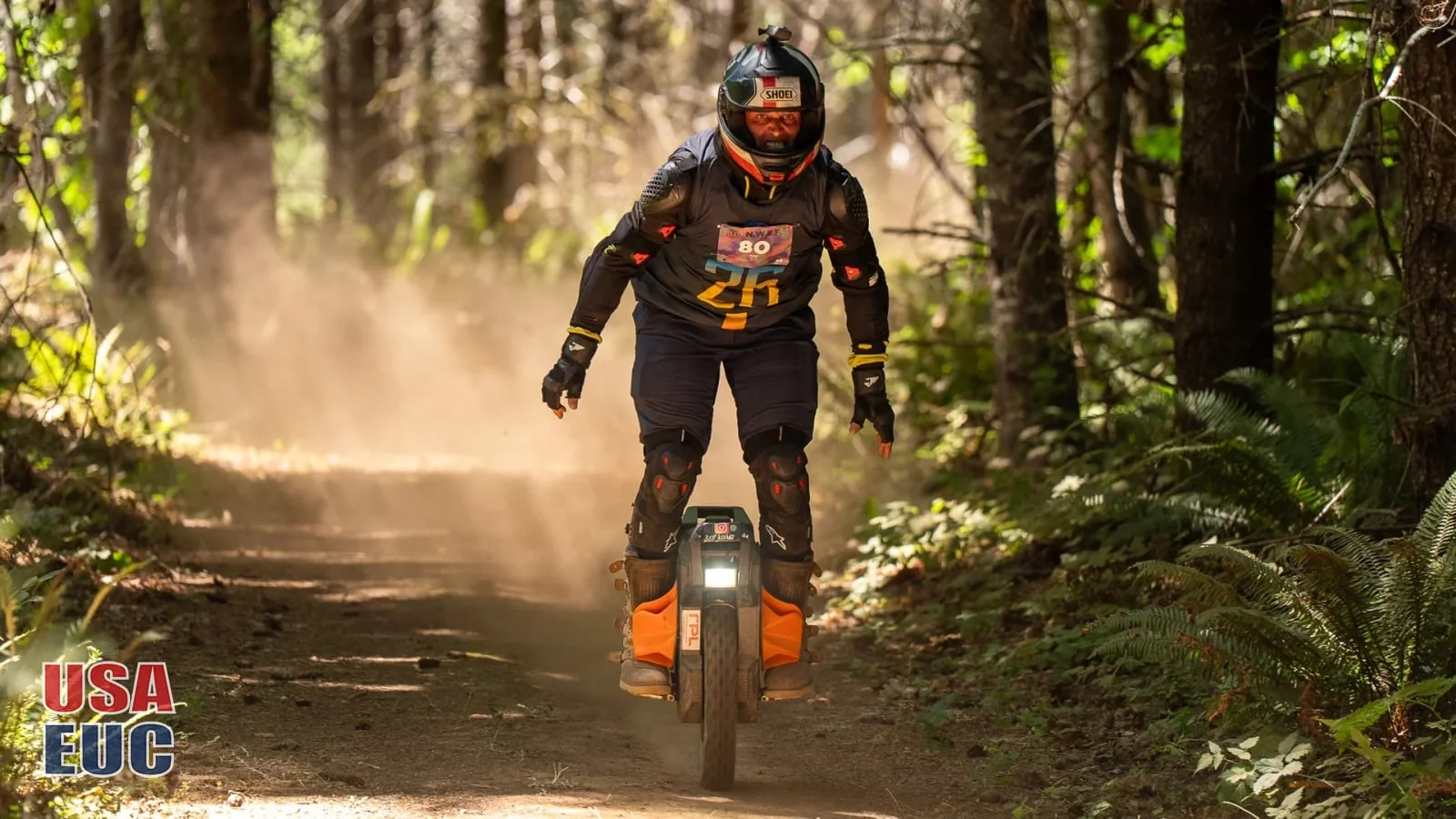
There is also no loaner safety gear. Riders without compliant protection, including an approved helmet, do not go on track.
Fagerness is direct about why that rule does not bend.
"Well, just always wear gear. I've learned the hard way," he said. "It is just worth it to take the extra few minutes to put on gear. It truly is because you never know and anything can happen."
What $949 Includes
Tuition is $949, paid in full at checkout. It covers the full three-day curriculum, on-track filming and end-of-day video classrooms, an Amped Electric Games event ticket, an official Amped jersey, an onsite camping spot, lunch, and a hydration station each camp day. Charging time and outlets are available during the midday break.
Camp tuition is non-refundable, and spot transfers require approval, so riders should review the payment terms before checking out.
Checkout runs through The Electric Angels, the nonprofit that operates Amped Electric Games, so that name may appear on the payment statement.
There is also a competitive reason to train on the Bentonville course before race weekend. USA EUC scores a rider's best two results of the season, and the Bentonville finale is the last scheduled points opportunity on the 2026 calendar.
Camp Amped puts riders on that course three days before the championship race, with two current national leaders providing the instruction and video review.
Registration, the full day-by-day schedule, FAQ, and payment terms are available at camp.ampedelectricgames.com.
Last updated September 18, 2026.