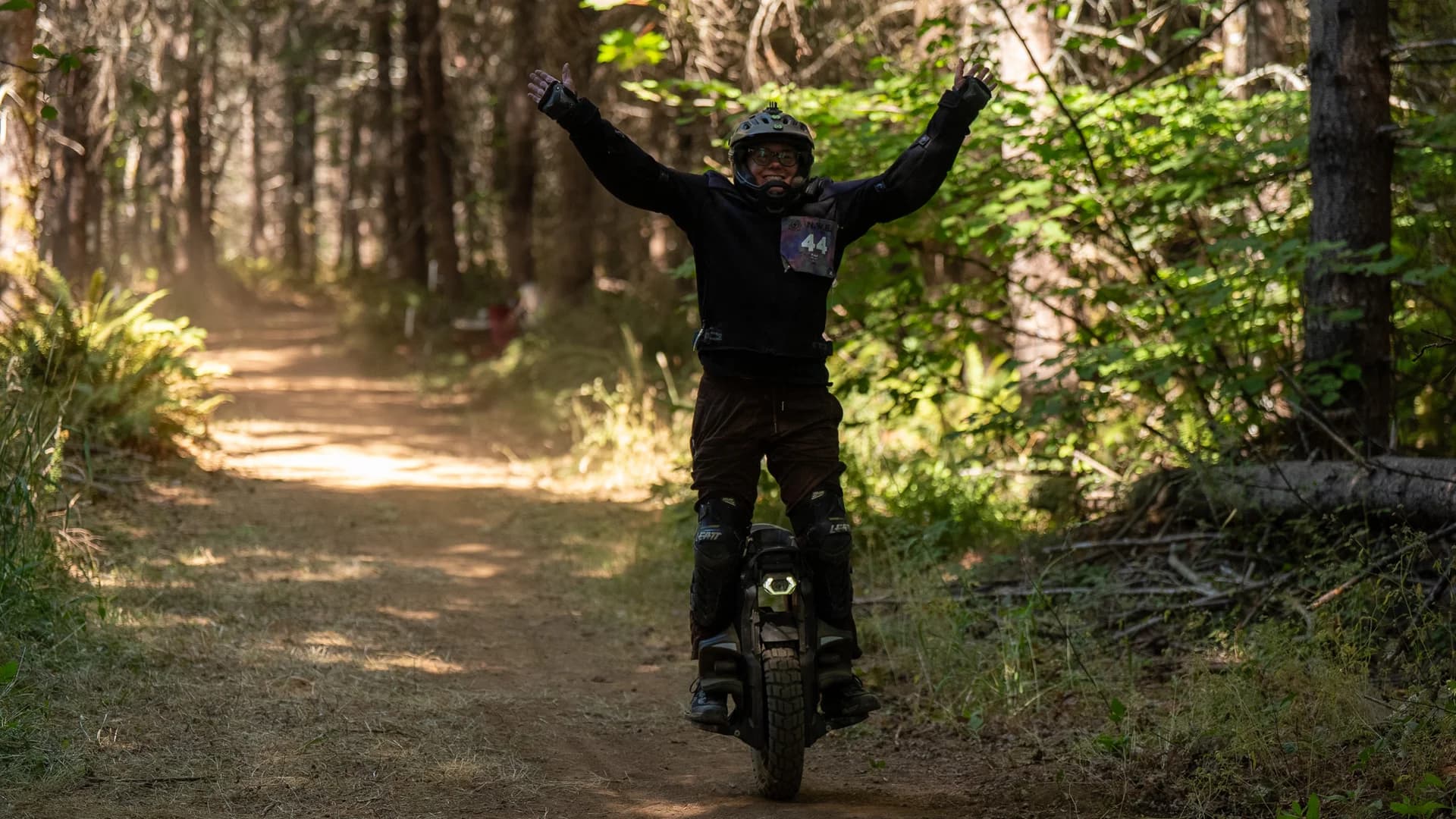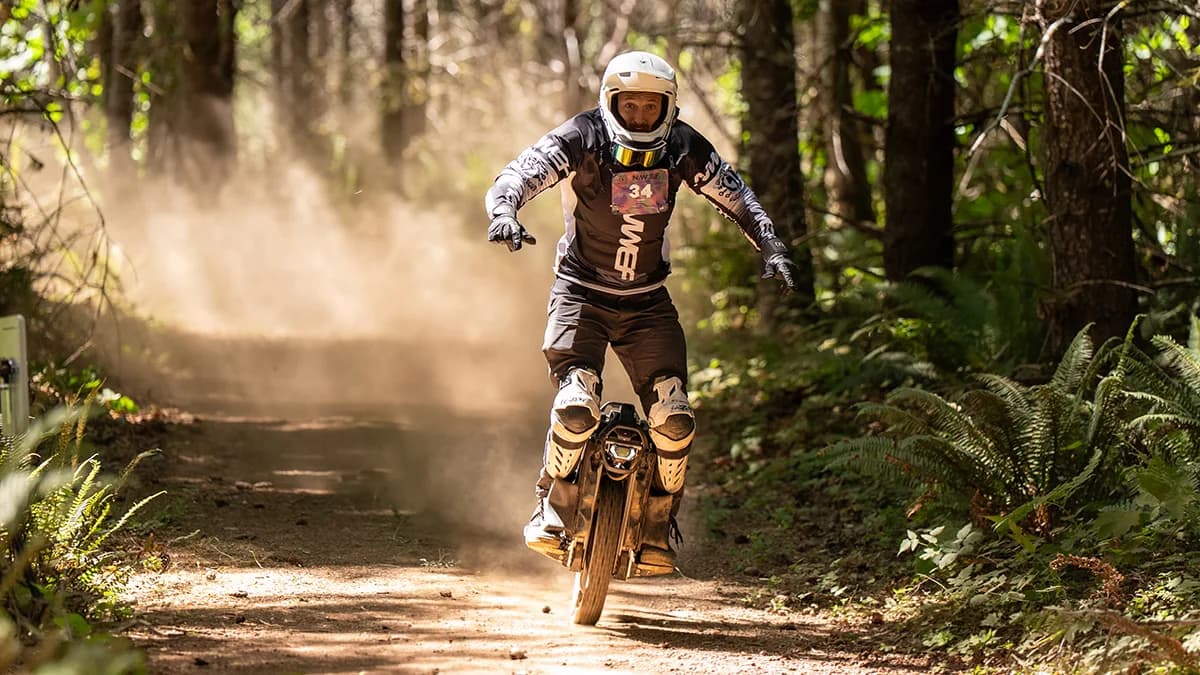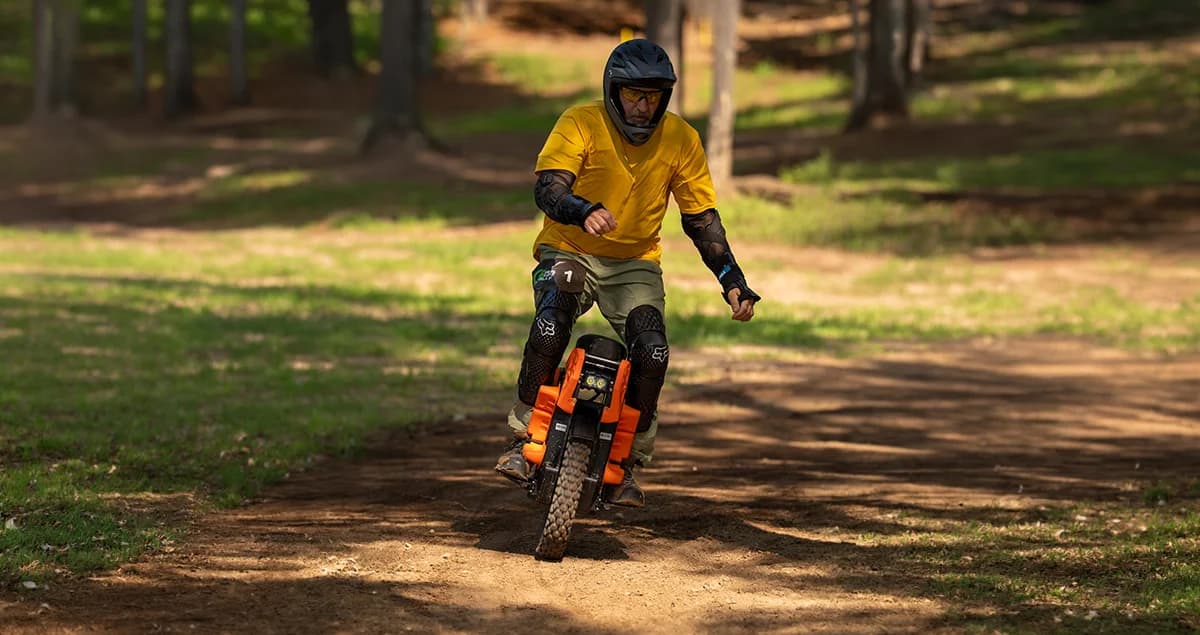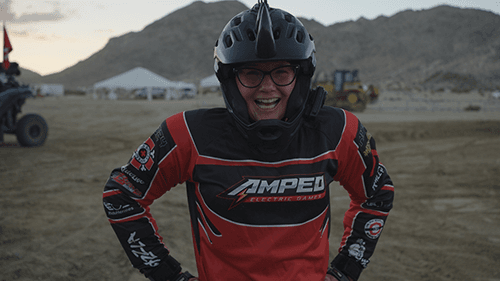
Nicki Friel arrived in Johnson Valley, California to line up for her first sanctioned electric unicycle race, an event produced in partnership with Amped Electric Games at King of the Hammers. She was not entering motorsports for the first time though. She was entering a new discipline with years of competitive experience already behind her. Racing under USA EUC at King of the Hammers, Nicki represented a growing segment of the field: experienced athletes transitioning into structured electric unicycle competition as the sport formalizes its national framework.

For USA EUC, riders like Nicki demonstrate how sanctioned electric unicycle racing is beginning to attract participants with established motorsports backgrounds who are looking for legitimacy, consistency, and measurable progression.
From Motorcycles to Electric Unicycles

Nicki Friel’s foundation is rooted in motorcycles, not personal electric vehicles. Her competitive history includes participation on a Baja 500 motorcycle team, the achievement of two land speed records at Bonneville, and multi-day navigation rally events that required endurance, teamwork, and technical route finding. These disciplines demanded precision and stamina rather than short bursts of speed, skills that translate naturally into electric unicycle racing.
Electric unicycles entered her life approximately four years ago through family involvement rather than personal ambition. Her boyfriend and her son began riding, and participation initially served as a way to stay connected rather than to compete.
“I hadn’t intended to be an electric unicycle rider,” she explained. “But I also wasn’t going to sit on the sidelines.”
Six months prior to her first USA EUC race weekend, Nicki made the decision to treat electric unicycling as a discipline worth focused attention rather than casual participation.
The Role of Structure in Competitive Adoption
For Nicki, one of the decisive factors in entering sanctioned EUC racing was the presence of an organized governing body. Coming from sports where rulebooks, schedules, and rankings are standard, the availability of a predictable competitive framework influenced her willingness to commit.
A published season calendar allowed her family to plan logistics, travel, and work schedules in advance. Rather than spontaneous attendance, events became deliberate entries. This shift from informal gatherings to structured competition represents a significant milestone in the maturation of electric unicycle racing.
Sanctioning also changes perception externally. Nicki noted that describing participation as part of an organized series rather than “just going out to ride” lends legitimacy when explaining the activity to others unfamiliar with the sport.
First Sanctioned Weekend and Competitive Outcome
At King of the Hammers, Nicki entered both Enduro and track formats during her first official USA EUC weekend. Despite limited time treating EUCs as a competitive discipline, she concluded the event as the Overall Women’s category winner, marking her first documented result within national standings.
The significance of this outcome is less about dominance and more about entry into recorded competition. A first-place finish establishes an initial benchmark within the standings system and provides a measurable starting point for future participation. In sanctioned racing, documentation is as important as placement because it transforms experience into an official competitive record.
Equipment and Practical Approach
Nicki's race weekend was completed on a King Song S18, a suspension-equipped wheel that she has owned for approximately four years. She refers to it humorously as her “legacy” wheel due to its age and extensive use. Unlike many competitors who arrive with multiple machines optimized for different conditions, Nicki entered with a single platform and a willingness to adapt.

The S18 has been repaired, taped, cleaned, and returned to service repeatedly. Its durability reflects a pragmatic approach rather than a gear-driven one. While she has since ordered a Nosfet EON to expand her capabilities, her initial sanctioned result was achieved without specialized equipment. This reinforces the principle that entry into competition is not limited by having the newest hardware but enabled by consistent practice and preparedness.
Community Integration and Gender Perspective
One of Nicki's consistent observations is that the electric unicycle racing community tends to integrate riders based on participation rather than demographic categories. She reported being treated as a rider first rather than singled out as a female competitor, an experience she views as both respectful and encouraging.

Her guidance to women entering the sport is practical rather than symbolic. She recommends learning from patient instructors rather than relying exclusively on significant others, noting that frustration can impede early progress if instruction lacks neutrality. This advice aligns with broader training principles across motorsports and skill-based disciplines.
Family Participation and Long-Term Outlook
Nicki's involvement is not isolated. Her family participates alongside her, and their collective presence reflects a broader pattern emerging within sanctioned EUC racing. The ability to integrate competition into family schedules, including school and travel logistics, highlights the accessibility of the current circuit. Structured seasons allow households to treat races as planned commitments rather than unpredictable excursions.
For Nicki, the appeal extends beyond individual results. She views the present moment as foundational. Participating in the early years of a developing sport carries a sense of historical significance, where early standings and appearances may become reference points as the discipline expands.
Snapshot Profile
Name: Nicki Friel
Hometown: Estes Park, Colorado
Division: Women’s
Background: Motorcycle racing, land speed records, navigation rallies
Primary Wheel (Debut Event): KingSong S18
First Sanctioned Event: King of the Hammers
Result: Overall Women’s category winner
Why Her Participation Matters
Nicki Friel’s entry into USA EUC competition illustrates a key transition within electric unicycle racing. As sanctioning bodies formalize schedules and scoring systems, the sport becomes increasingly attractive to athletes with prior competitive experience. Their participation brings credibility, raises performance standards, and demonstrates that the discipline can coexist with established motorsports rather than remain separate from them.
Structured competition provides continuity. Experienced athletes provide depth. Together, they contribute to a competitive environment where progression can be tracked, compared, and sustained across seasons.
Getting Involved
USA EUC organizes sanctioned electric unicycle racing events with standardized formats, official standings, and divisions designed for both new and experienced competitors. Riders and families interested in participating can review schedules, rules, and registration details at usaeuc.com.
As electric unicycle racing continues to evolve, athletes like Nicki Friel exemplify how prior experience, structured governance, and family support converge to shape the early competitive record of a developing national sport.