Third at Northwest Electric Fest and third in the standings, the Reno racer picked Fagerness out in March and is now chasing him around a new job.
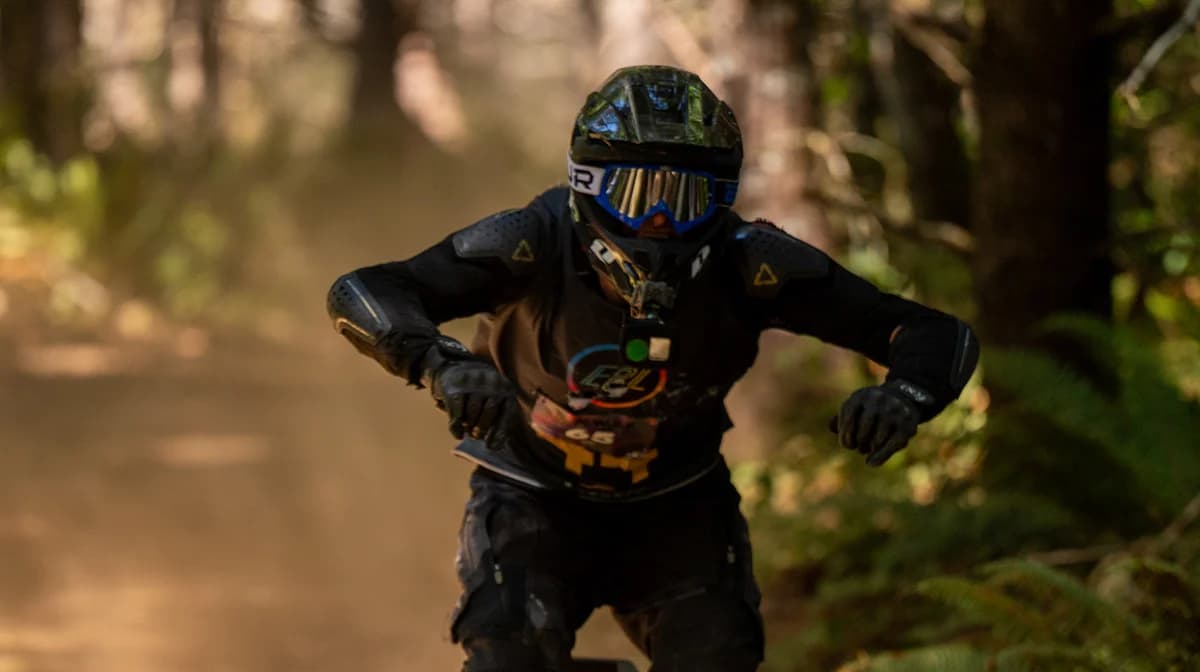
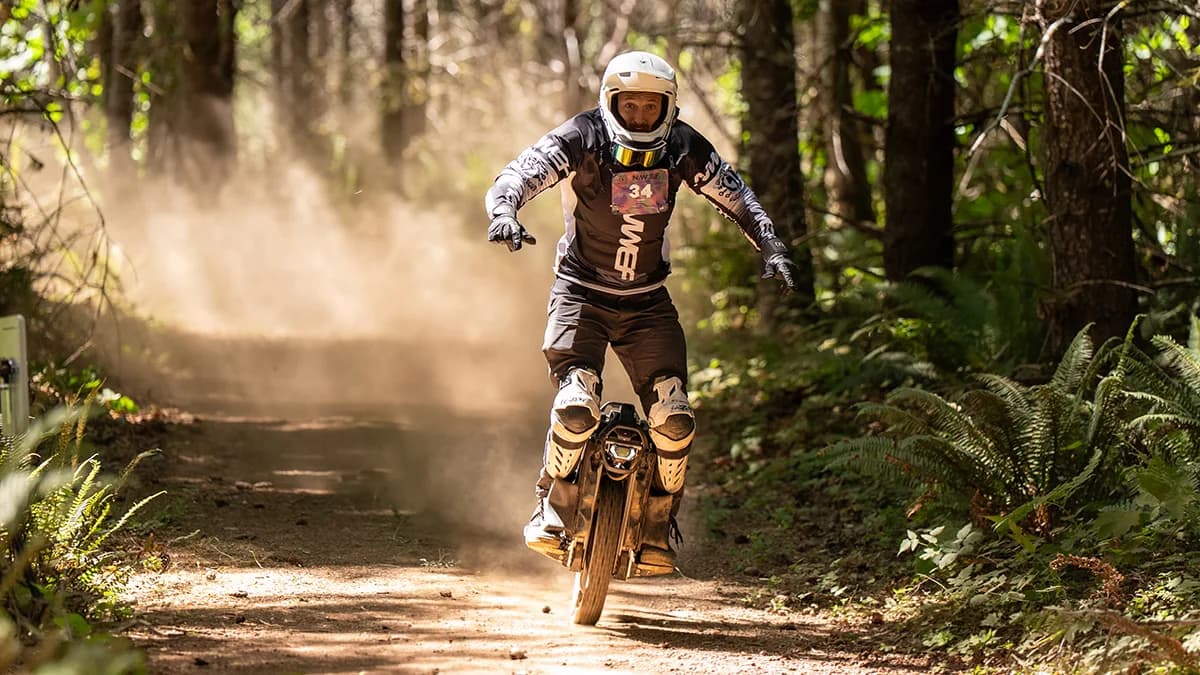
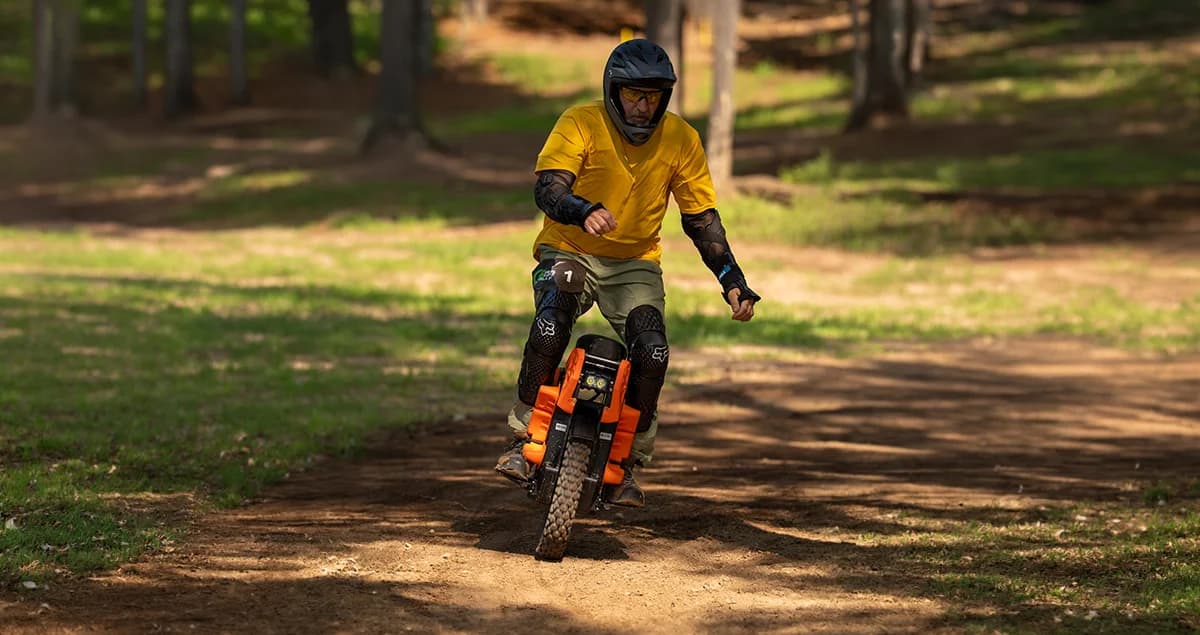
Justin Davis, 29, of Reno, Nevada, finished third in Mens Pro at Northwest Electric Fest 2026 with a combined time of 10:35.300, holding off a first-year racer by 1.4 seconds. He sits third in the USA EUC Mens Pro Off-Road standings, behind Joshua Fagerness and Zac Darnell, chasing a national championship that requires something he has not yet managed. He races a 168-volt Begode X-Way, trains in a gym he did not use at all when he started, and is doing all of it around a job he took this year. He also called the eventual champion four months before anyone else did.
What Happened to Justin Davis at Northwest Electric Fest?
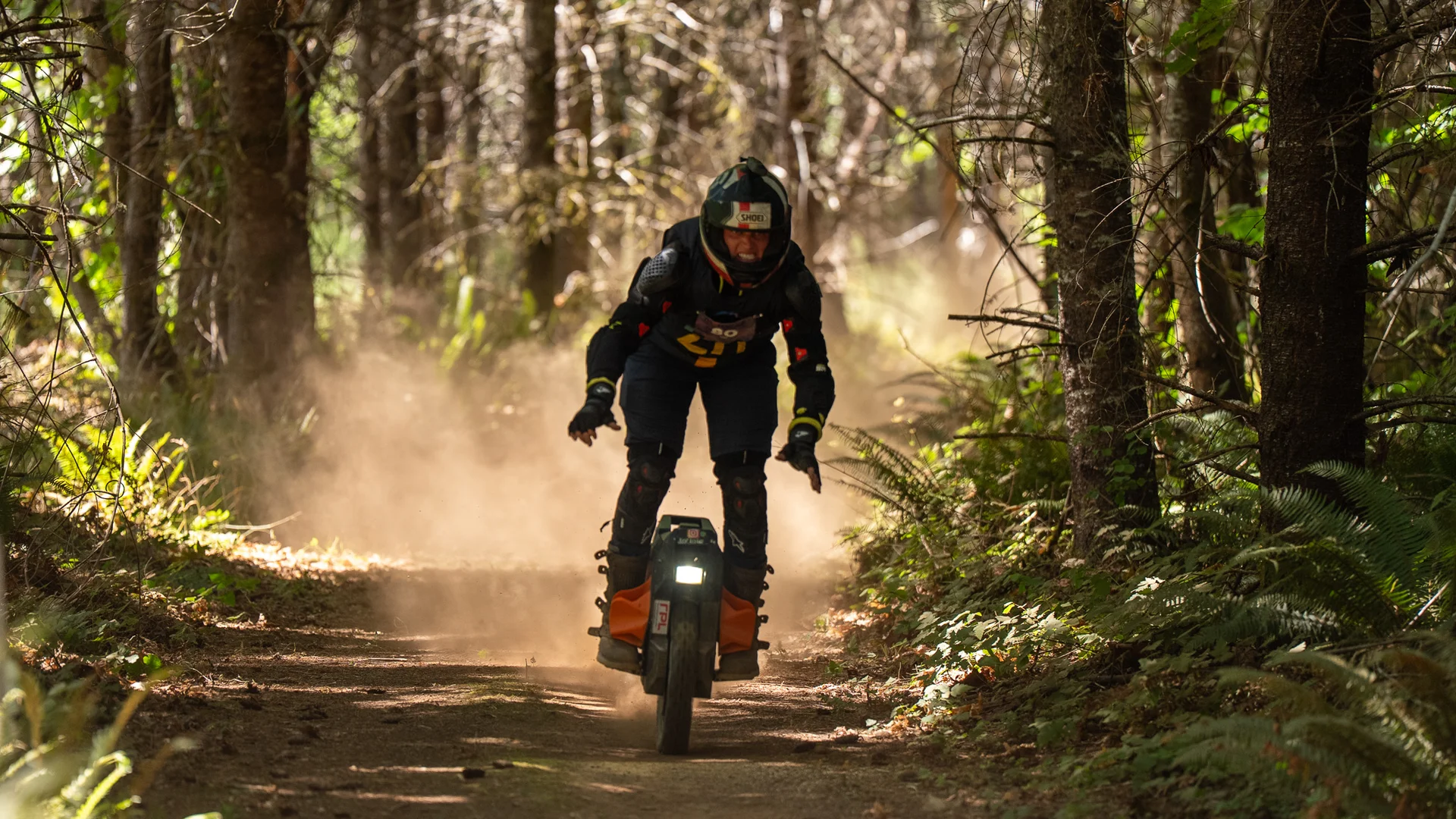
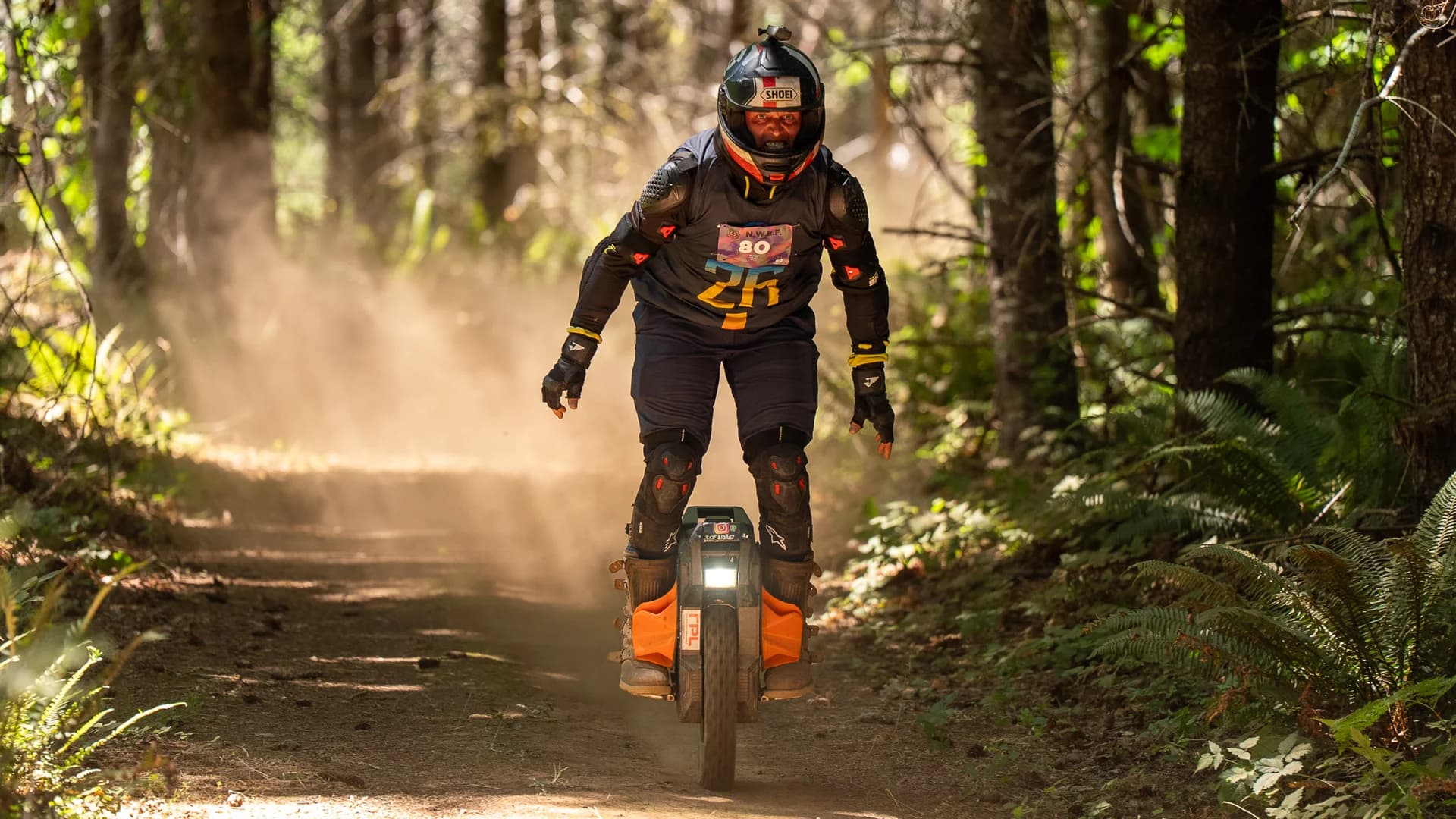
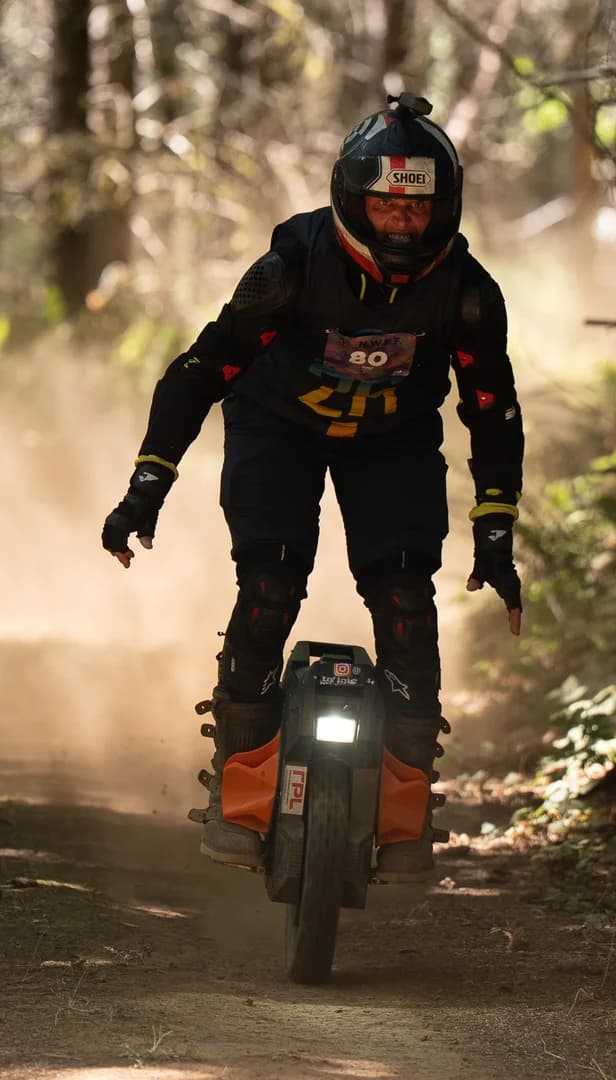
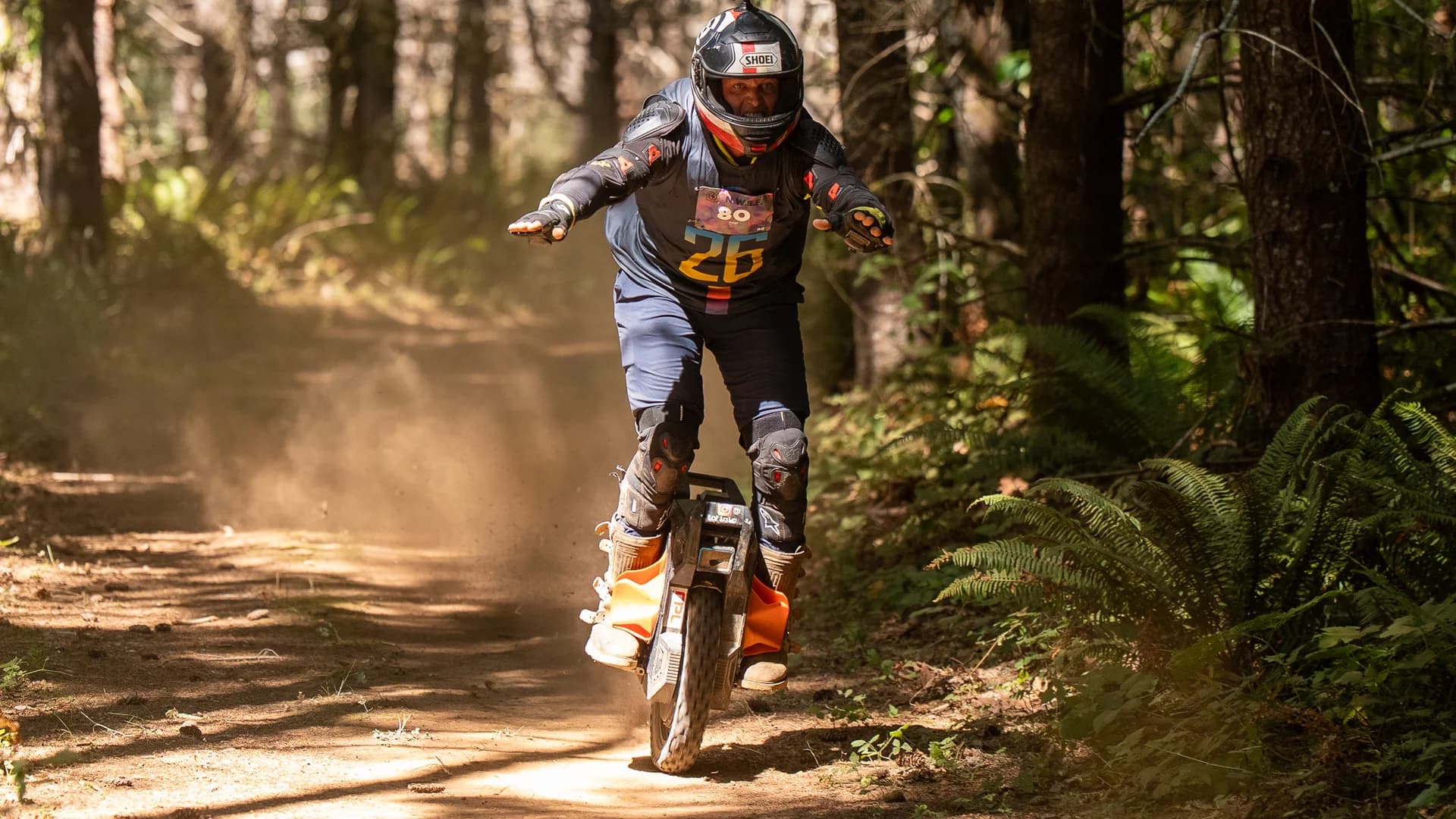
Davis pushing hard across the finish of the uphill heat #4 while his Begode X-Way was overheating. Photo credit Seth Johnson (USA EUC).
He rode a deliberately conservative race and kept his podium by the width of a decision. Davis arrived without his usual support: his wife Frances and their daughter Anastasia were in Texas visiting family that weekend, and his routine went with them. He was not eating properly, was not drinking the right things, and had left his vitamins at home.
I knew I couldn't get injured and so I kept the rubber on the ground during all the racing
The pressure came from behind. Jace Cundiff, racing the first event of his life, had come out from New Mexico and spent practice glued to the riders in front of him. As Davis put it, "it's hard to shake that guy loose from behind you and he's out here from New Mexico at his first race." After Friday's downhill run, Cundiff was a second ahead of him.
I had to give it everything I had in the tank to hang on day two and steal that third back
Heat two of the uphill is where he answered it, and where the wheel picked its moment. His Begode X-Way overheated on that run. Davis took second on it anyway and edged Zac Darnell by a second doing it, which is worth sitting with given Darnell finished second overall and eighteen seconds up on him across the weekend.
So the overheat and the best run of his weekend are the same run. He held third anyway. Underfed, without the people who normally get him to a start line in one piece, and managing a machine that was managing itself.
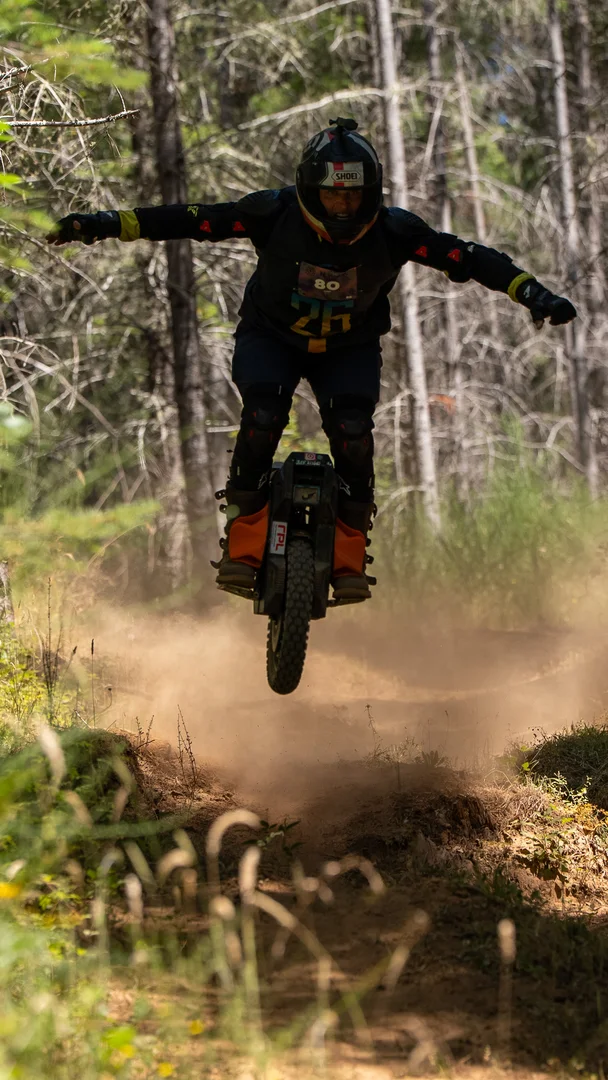
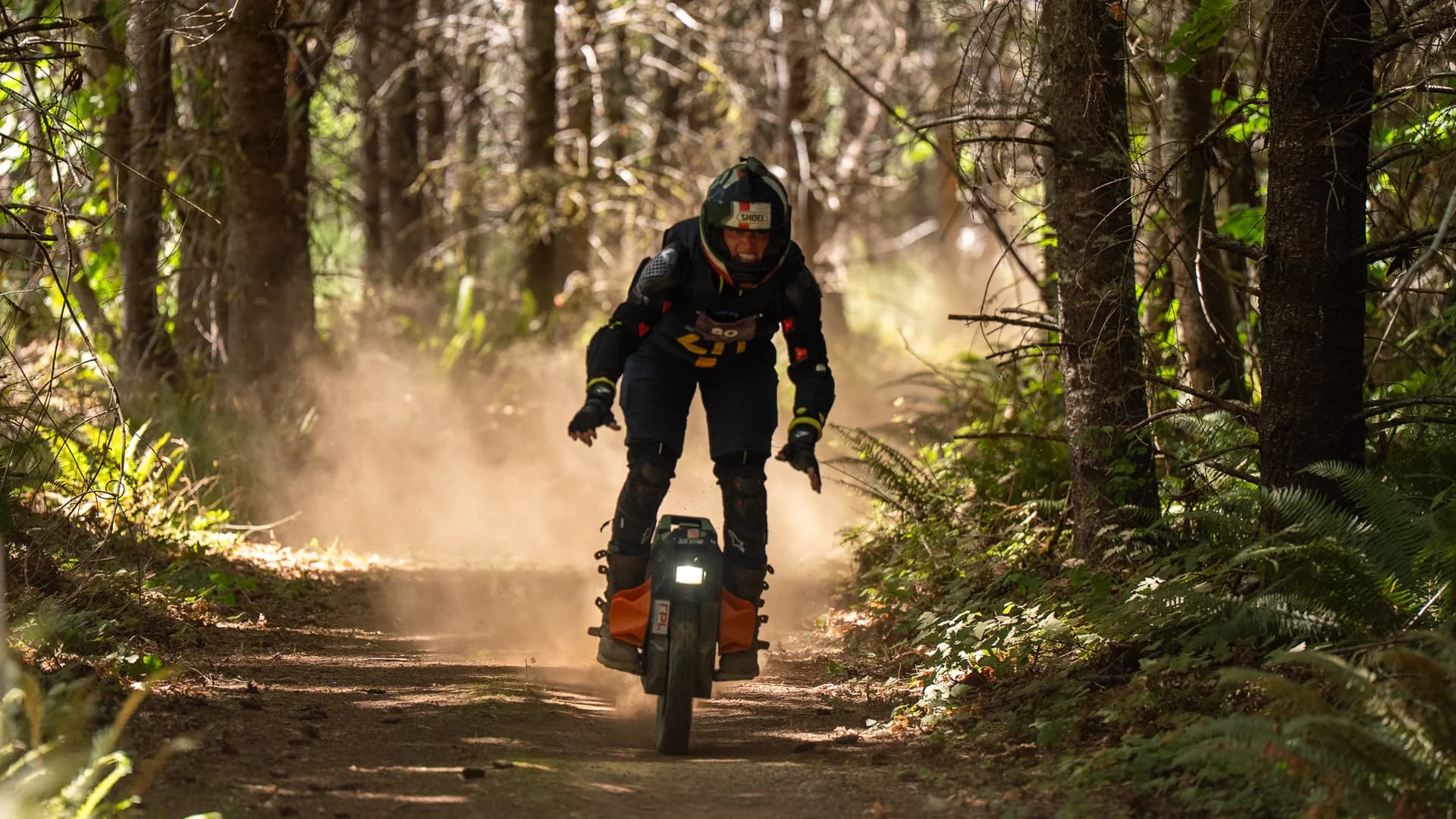
Justin Davis catching some air in qualifications, despite trying to "Keep the rubber on the ground". Photo credit Seth Johnson (USA EUC).
What the format costs is not obvious from the outside. Davis breaks it down minute by minute:
"The race is five minutes so minute one, minute two you're amped. Minute three you're like ah let me get up. Minute four, minute five you're like when will this end?"
Other courses reward a burst. This one takes everything in the tank, which is why arriving underfed mattered as much as it did.
The course did the rest of the work. Five minutes of narrow single-track threaded with rocks, roots and stumps, which Davis describes as the kind of trail you find by accident:
"Something you just stumble upon in the woods with your friends and you're racing down it trying to run away from them."
How Did Davis Get Into Racing?
His younger brother talked him into it. Davis had known EUC racing existed for about a year, having found it through YouTube a week too late to make the Arkansas event. Then his brother, racing Onewheels at Seek 'n Shred, made the pitch.
In Davis's telling, it was: "Hey, there's an EUC category. You should sign up. I think you'll win it." There was also a wheel on the line.
He turned up and took second in Pro behind Zac Darnell, beating riders he had looked up to, and met Matt Burt for the first time that weekend.
So I was instantly hooked to racing from that day on.
He came from motocross and BMX, with some surface-level ski racing, and reads the sport as a combination of the two he cares most about:
"EUC is almost a hybrid of my two favorite sports all in one."
How Does Justin Davis Train?
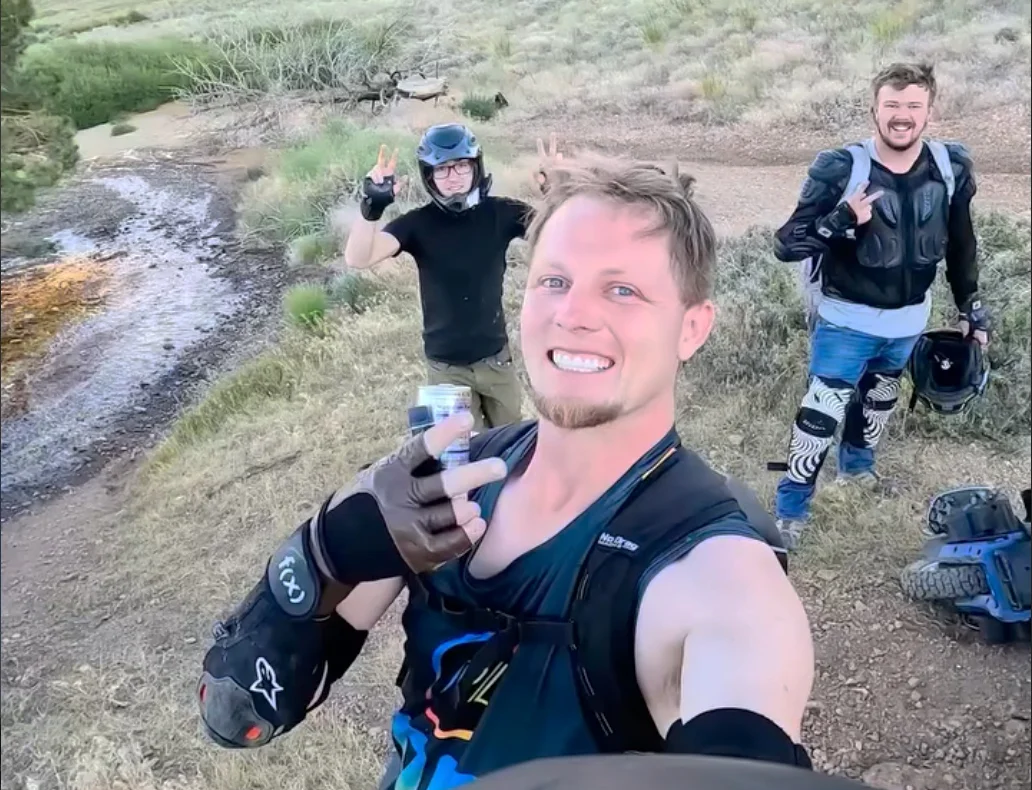
Justin rides trails with his crew to train near Reno, NV. Photo provided by Justin Davis via @motounicycle.
Harder than he used to, and on a different footing. Davis has always been in the gym. What changed is what he is training for: EUC maxed out the intensity and changed his diet with it, and he now works with Chris Perkins, a local rider and personal trainer who races himself. What he did not have at the start was any sense that racing asked for preparation at all.
Well, I didn't think you had to do anything before I started racing.
Off-road did not expose that. Street racing did. "I quickly realized I'm out of shape the first time I got on a street course, particularly because that's where everyone beat me," he said. His conclusion was blunt: he needed to be physically fit to have any shot at these guys.
What that turned into:
"So I train religiously in the gym multiple times a week and show up, give myself the best chance possible to win these things."
The method has since been refined. He trains the things that hurt in a long race excessively, then backs off in the final week rather than building into it, because arriving sore costs more than the last week of work gains. His own assessment is that it is making a huge difference and that he is not in as much pain.
His read on why it matters is not about fitness for its own sake:
"The best people who show up are super competitive, and you're going to have to ride outside of your comfort zone if you want to win one of these."
What Wheel Does Justin Davis Ride?
Currently he rides 168-volt Begode X-Way, the same machine Zac Darnell races. Davis got to demonstrate what it does in the least likely setting available: opening for Jeremy McGrath's Hole Shot King at King of the Hammers, in front of an idol he met as a child and a crowd he estimates at 100,000 across the weekend.
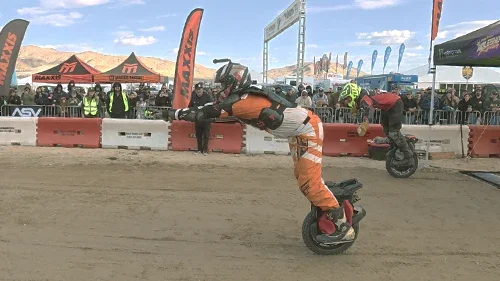
Davis edges Fagerness head-to-head in the Jeremy McGrath Hole Shot King challenge at King of the Motos 2026. Photo credit Seth Johnson (USA EUC).
He went head to head with Fagerness there and read the result as a hardware question rather than a rider one, saying it came down to the battle of the wheels more than anything, because both of them were leaned out over the front.
King of the Hammers is the largest audience he has ridden in front of, and he reads events like it as the sport's best shop window. By his estimate 100,000 people were on the ground across that weekend, watching riders take a course faster than most of them would dare. He calls it "a great place to get notoriety," and his read on the sport from there was short: only up from here.
How Did Davis Set Up for the Course?
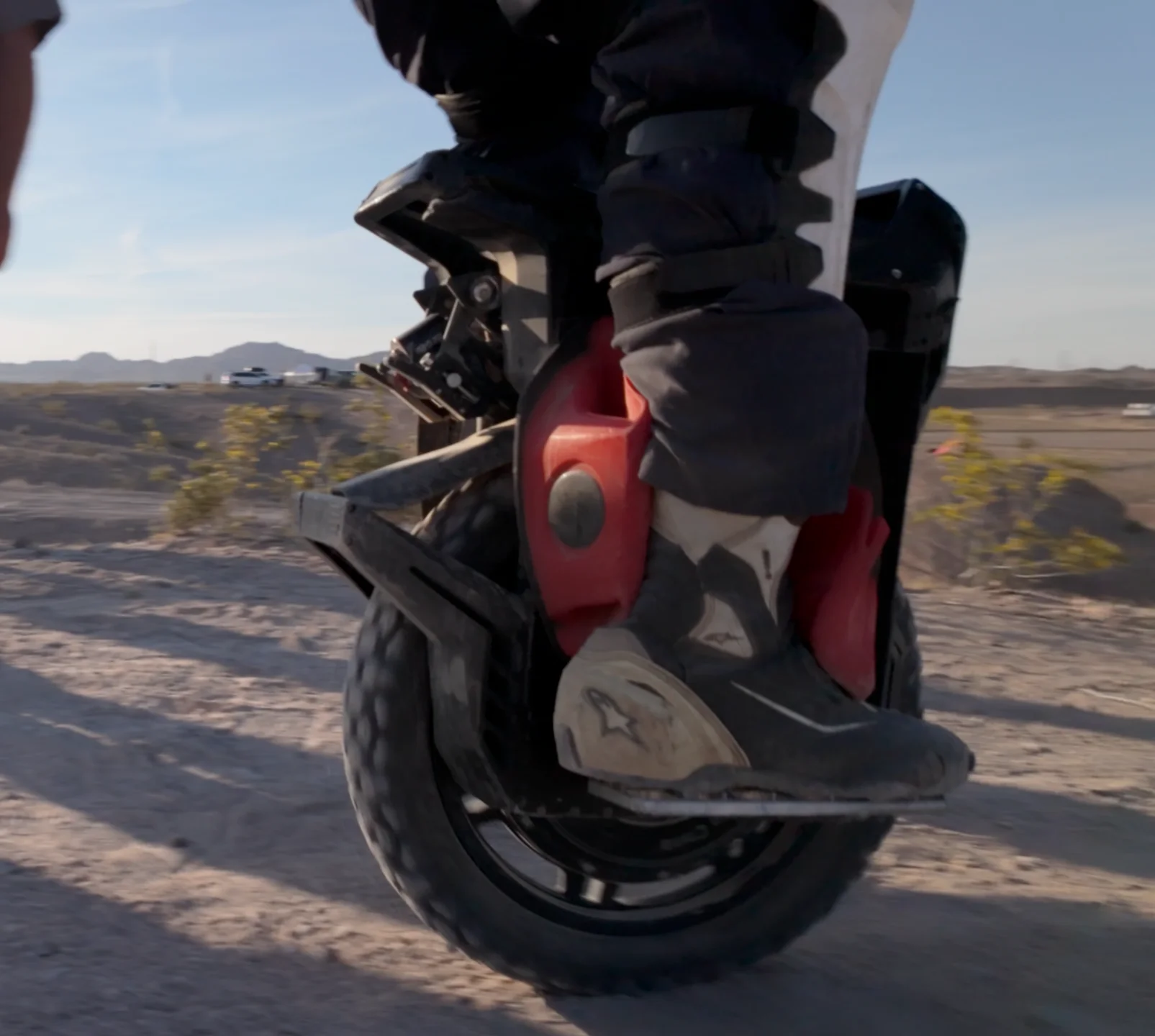
Close up of Davis' Begode X-Way. Photo credit Seth Johnson (USA EUC).
His setup changes for the surface rather than the event. At Northwest Electric Fest the one deliberate adjustment he made was pressure:
"I lowered the PSI for the racing definitely give myself more traction especially when we're going up the hill."
Beyond that, the wheel he raced is the wheel he rides at home, because the terrain at Havenroot is the terrain he already seeks out.
His protection comes from Chris Clark at Clark Pads, a relationship that started at his first race when Clark walked up, showed him the trails, told him the pads on his wheel were junk and replaced them. Davis's verdict is short: "that's revolutionized my racing game."
What Did Davis See in Joshua Fagerness?
At Let It Ride 5 in March, when asked about the field, Davis picked out the rider who had just beaten him.
Fagerness was, in Davis's words, "a rookie this year. He's just started racing." Then the part that reads differently now:
better watch out for him because he's hungry
Davis has since revised that read, and the revision is more useful than the original. Hunger is not the explanation. Fagerness came from other sports and is disciplined in calisthenics, and what Davis watches him do now is invent: the more he rides, the more he finds that has not been done on a wheel before.
The specific thing is cornering. Fagerness enters corners faster than the rest of the pro field considers sensible, then whips the wheel through the turn the way a mountain biker would, and carries it out the far side. That is not a fitness advantage or a hardware advantage. It is a technique nobody else in the class is using yet.
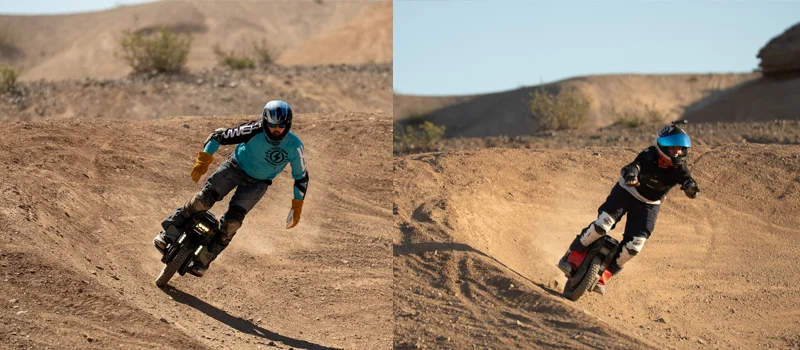
Fagerness, left, carries a berm at Let It Ride. Davis, right, on the same kind of corner. Photo credit Seth Johnson (USA EUC).
Davis is blunt about what that means for him: he has to learn it or he falls behind. His advice for anyone drawn against Fagerness in this year's Thunderdome final is to wish them luck.
At that point Fagerness had won Thunderdome at Amped Electric Games and Let It Ride, and not much else. By July he had won Seek n' Shred and Northwest Electric Fest, and he now leads the Off-Road standings on 0.00 points from four races. Davis is 19.39 back in third.
What Is Davis Racing For?
A national championship, on terms he is candid about not yet meeting.
Two clean sweeps wins the championship. I don't have a single clean sweep.
He is unusually articulate about why the format works. Two scoring races means a rider does not have to chase a full calendar to compete: show up to two local rounds, win both, and the title is live. In his words:
"if you really are the best out there and you show up, you just got a clean house twice and you're USA EUC champ, which is what we're after all out here."
The obstacle this season is not a rival. It is a calendar. He started a new job this year and says plainly that it jeopardizes the EUC career a little.
I'm going to make sure if these guys want to win, they know that they're going to have to get through me. I'm out here. I'm hungry too.
He is also the rare front-runner racing without a wheel behind him, and he is not subtle about it: "I'm not tied to any competitors. So hey, there's an open guy out here. He's hungry."
He is also unusually clear about what he thinks the sport needs, and it is not more events. It is fewer places to put them. "I think all EUC events should come in on USA EUC," he said. His reasoning is that a split calendar splits the field: riders pick a side, the best of them stop meeting, and nobody finds out how fast the machines actually are. What he wants instead is everyone at the same start line, so the sport can be pushed as hard and as fast as it will go and what these things are capable of gets shown properly.
That is a strong position for a rider who stands to lose from it. A consolidated calendar means the strongest fields he could enter, and he is third in them.
Does Davis's Family Ride Too?
All of them, in one way or another. His wife Frances rides, and his read on her role is unambiguous:
"my wife supports me in racing, which you can't ask for anything more."
His daughter Anastasia has a wheel of her own waiting, an MTEN Mini, which makes the plan he described after Northwest Electric Fest less a sentiment than a schedule.
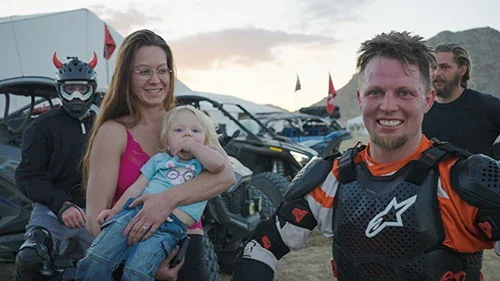
Davis with his wife Frances and daughter Anastasia. Photo credit Seth Johnson (USA EUC).
Between events he commutes on the wheel, which produces his favorite recurring result. Coworkers leaving at the same time try to race him out of the car park, and unless they are willing to double the speed limit, they lose every time.
Most people who see him have no idea what they are looking at. In leathers and a full-face helmet on a single wheel, the question he gets is always the same one: how fast do those go? The honest answer is faster than they are expecting, and he is content to leave it there.
Davis rides as @MotoUnicycle and can be found under that name across platforms.
Interviewed at King of the Hammers, Johnson Valley, California, March 2026; at Let It Ride 5, Boulder City, Nevada, March 2026; and at Northwest Electric Fest 2026, Veneta, Oregon, July 22, 2026. Results from official USA EUC timing.