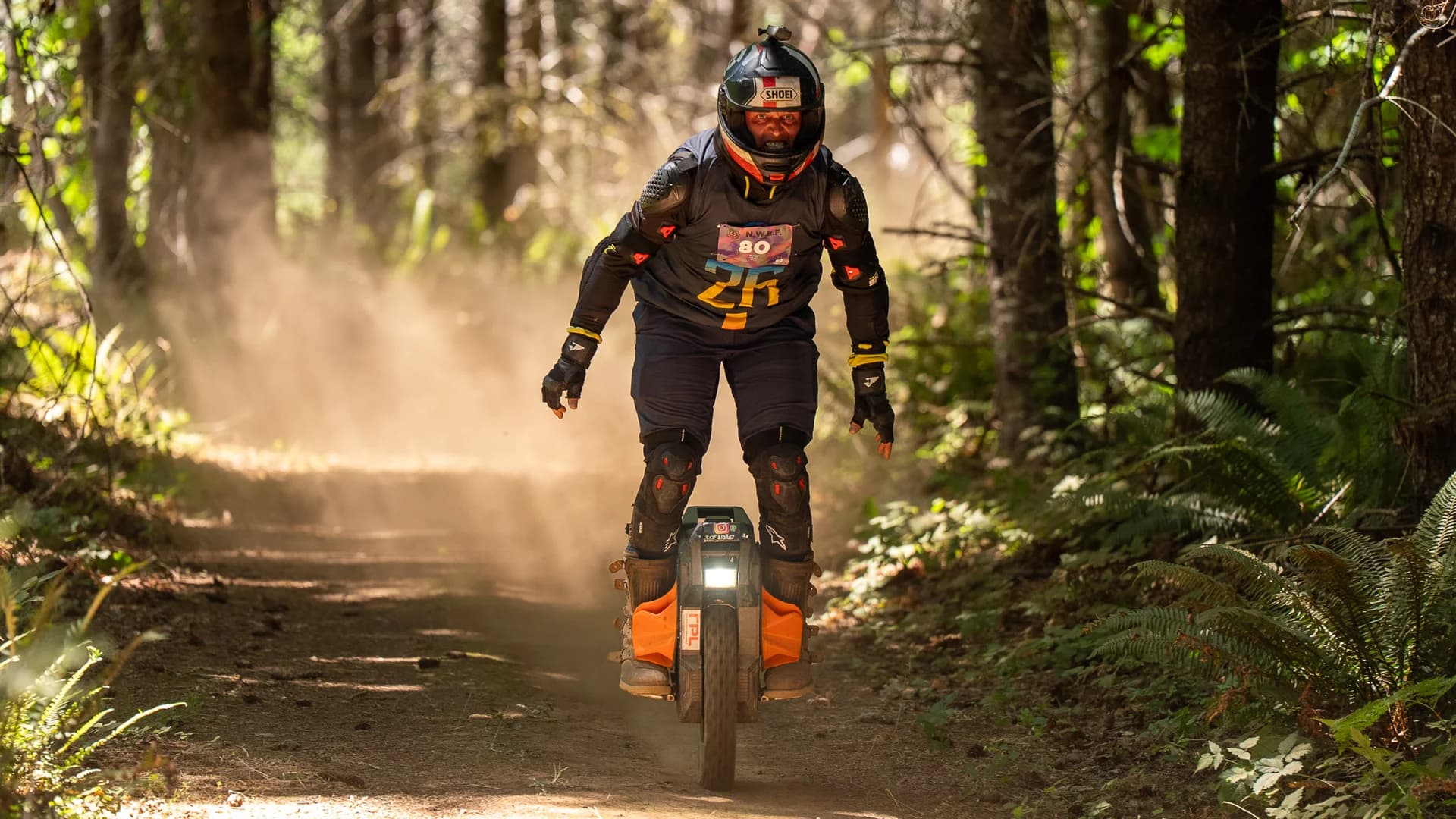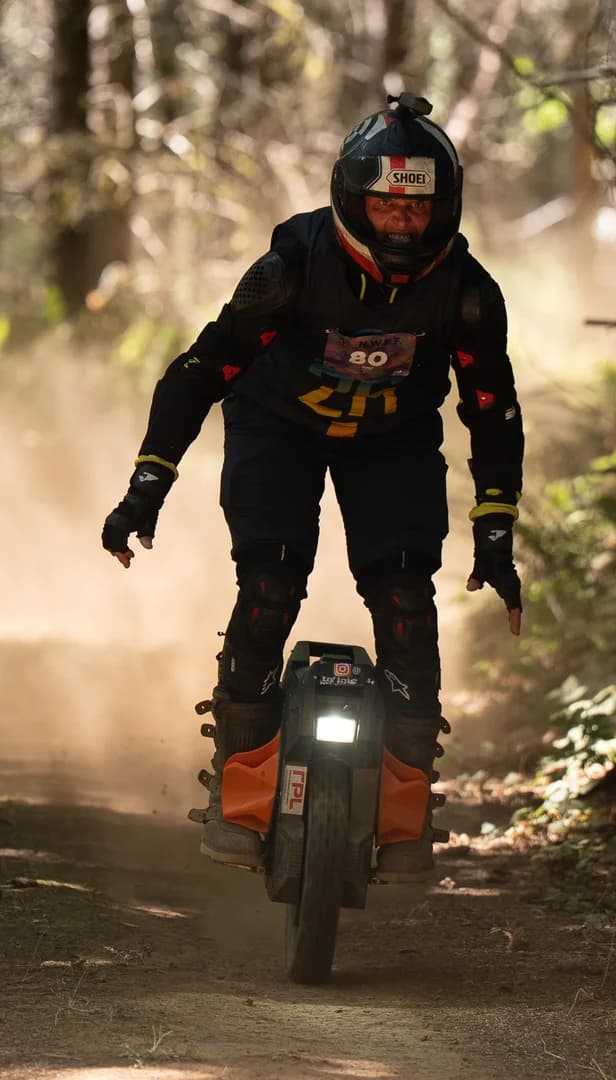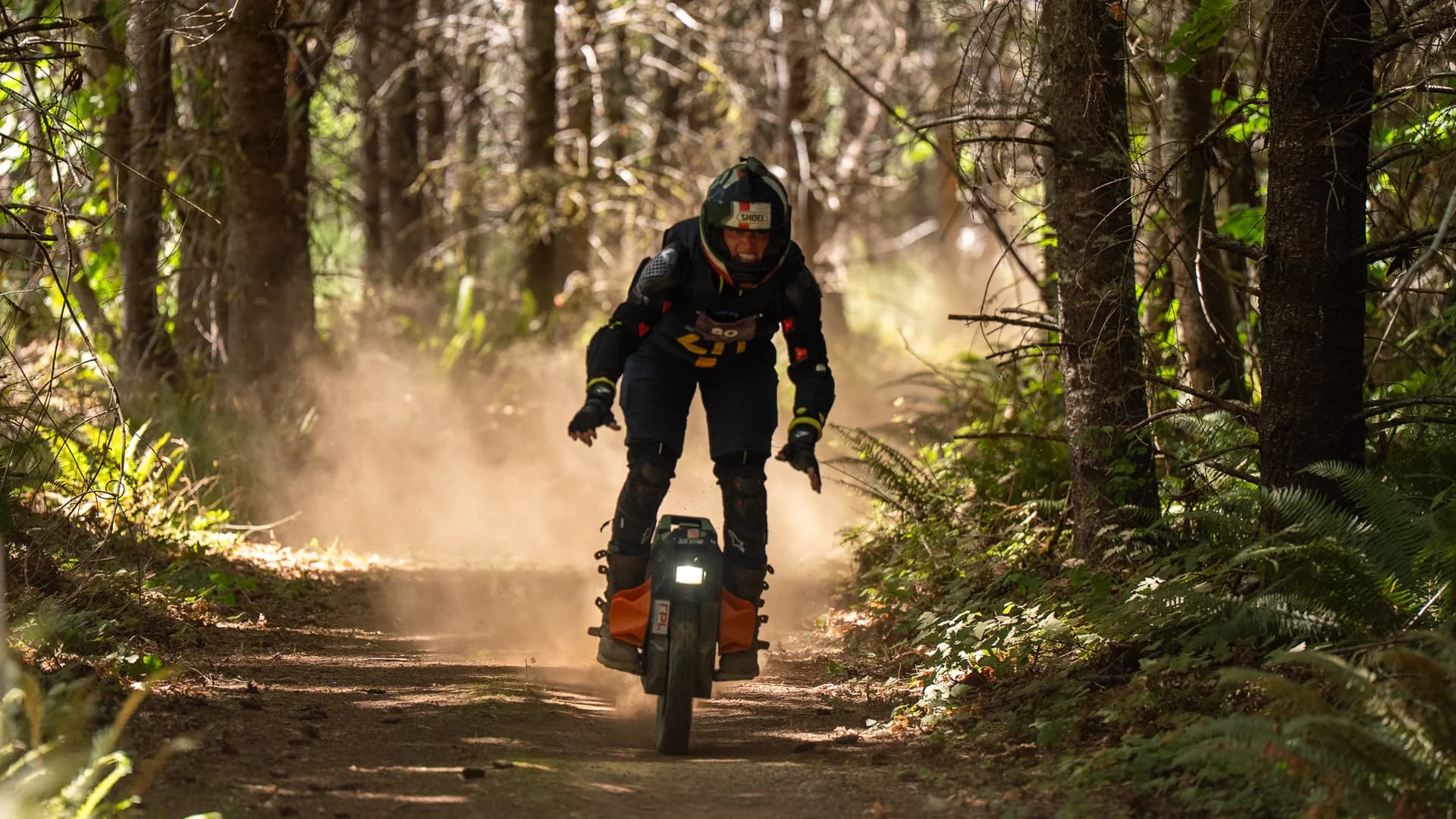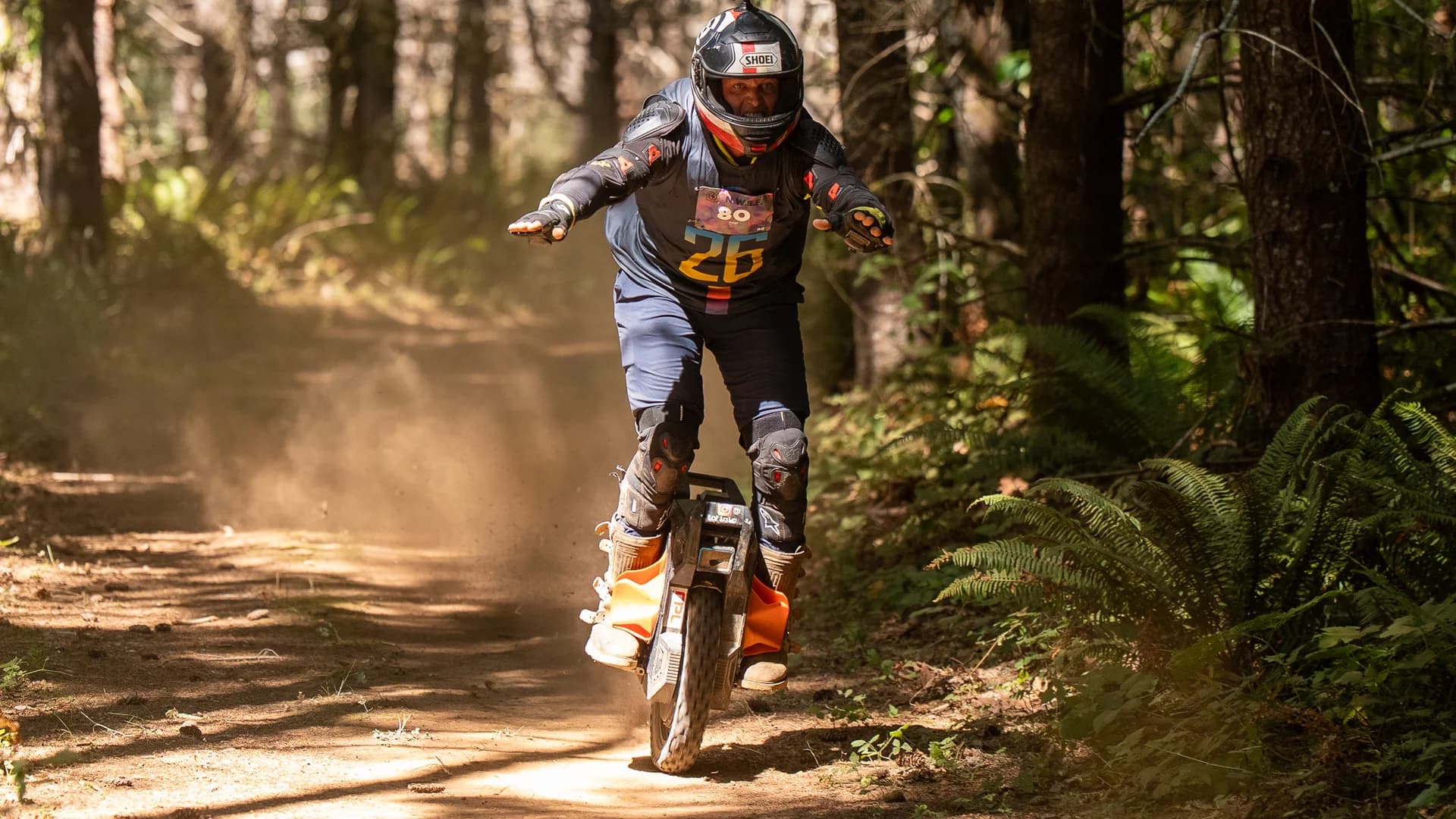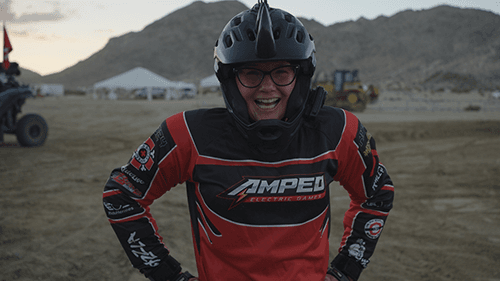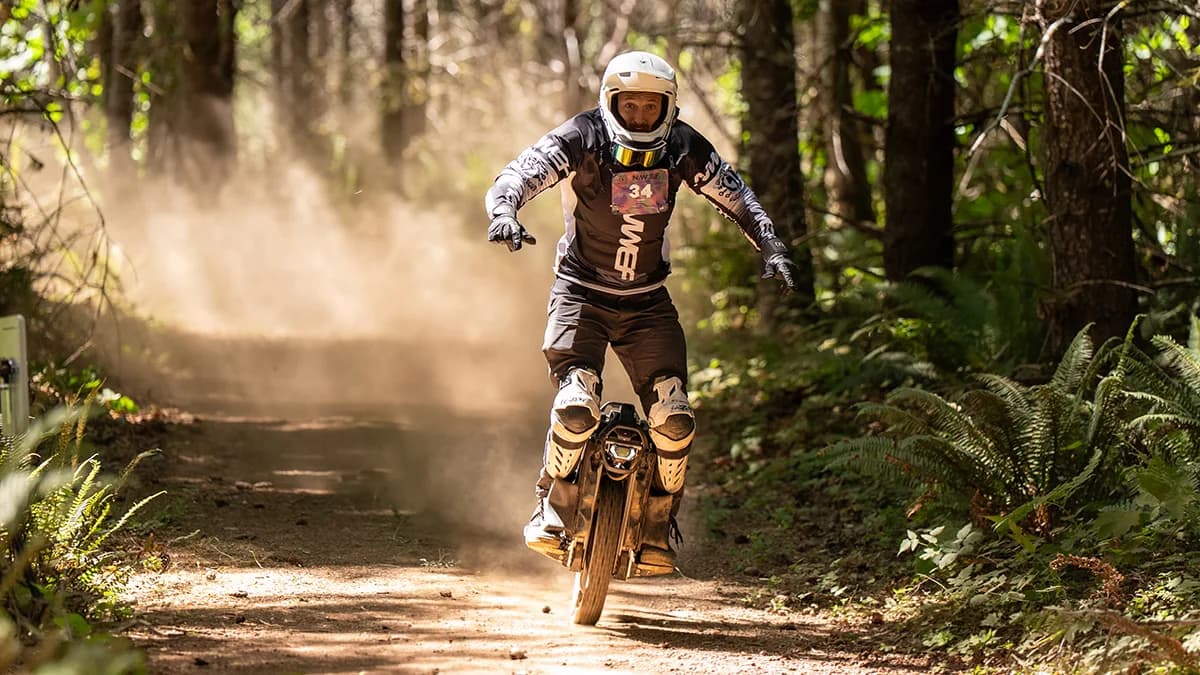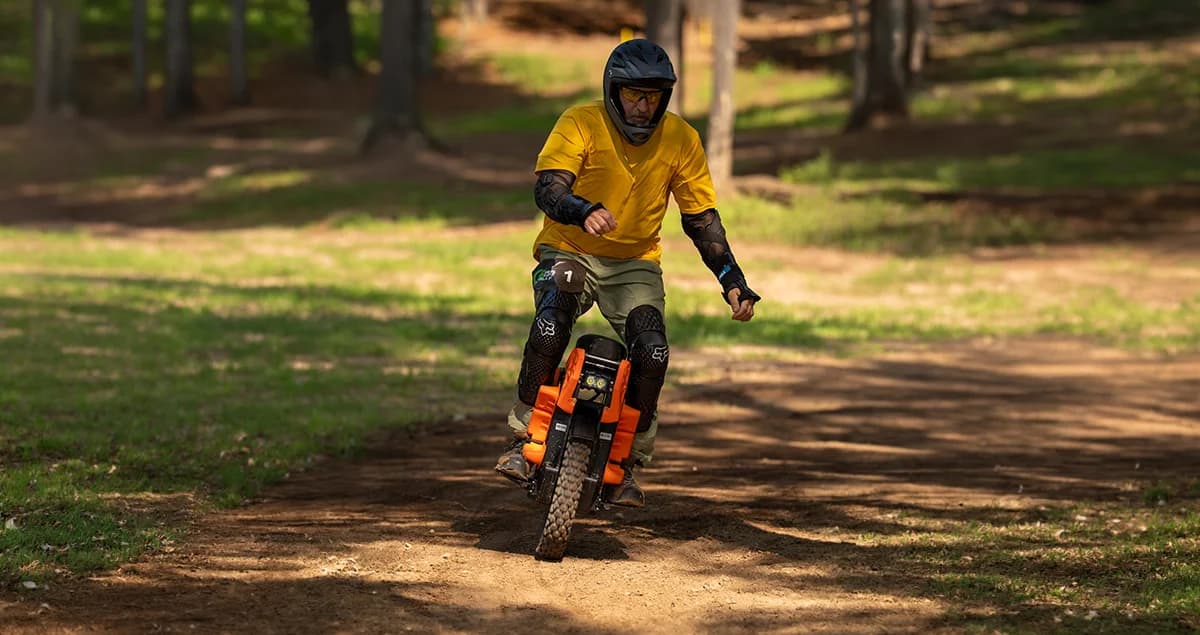
When Justin Davis rolls up to a start line, he does not carry the energy of someone trying out a new hobby. He looks focused, measured, and ready to compete. That mindset is part of why his name continues to surface near the front of the pack in electric unicycle racing events and why many riders in the growing EUC racing scene already recognize the handle MotoUnicycle.
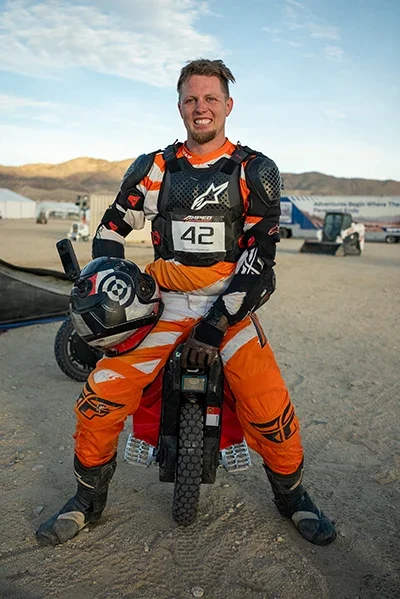
“You’re going to have to ride outside your comfort zone if you want to win one of these.”
Based in Reno, Nevada, Justin did not enter electric unicycle racing through sponsorships or organized teams. His entry point was curiosity, online videos, and a missed chance that turned into motivation.
USA EUC Career Highlights
1st Place – Short Bus Enduro
2nd Place – Chocolate Thunder Enduro
2nd Place – Short Track
Currently Ranked 2nd Nationally
From Watching to Competing
Justin first discovered organized EUC racing through videos and social media coverage. He wanted to attend one of the big sanctioned races he saw online, but the timing did not line up. A year later, his younger brother mentioned a nearby festival that included an electric unicycle race category. Justin signed up without much expectation and ended up taking second place in the pro class.
That single result changed his direction. Racing shifted from something he followed casually to something he started preparing for intentionally. The atmosphere, the competitiveness, and the sense that the sport was still forming all combined to pull him in quickly.
Built on Motocross and BMX
Long before electric unicycles entered the picture, Justin had already spent years immersed in motocross and BMX. Those disciplines demand quick reflexes, strong body positioning, and the ability to read terrain at speed. Electric unicycle racing asks for many of the same fundamentals, only delivered through a different machine.
Instead of handlebars and throttles, control comes from posture and balance. The similarities surprised him. He often describes EUC racing as more comparable to traditional motorsports than most people expect. The same intensity is there. The same pressure is there. The same need to improve every time you line up is there.
King of the Hammers and the Hole Shot Moment
At the massive off-road gathering in Johnson Valley, Justin competed across multiple electric unicycle racing formats, from short track motos to endurance runs. One standout moment came during the Jeremy McGrath Hole Shot Challenge, where the emphasis shifted from endurance to raw acceleration. Head-to-head starts required precision and confidence in the first few seconds alone.
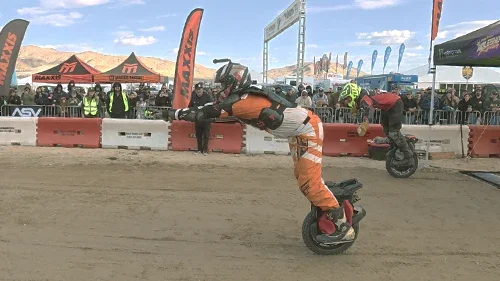
It was also a full-circle experience for him personally. Growing up around motocross culture, seeing that name attached to the challenge carried weight. The setting reinforced that EUC racing was no longer a niche curiosity. It was stepping onto larger stages.
Race Day Mindset
On race day, Justin’s approach is less about hype and more about control. He focuses on breathing, posture, and the first line off the start. The adrenaline is there, but he treats it as something to channel rather than something to fight. Coming from motocross, he is familiar with the surge of nerves that hits just before the countdown. The difference with electric unicycle racing is the immediacy of balance. There is no easing into motion. The first lean matters.
He often talks about the importance of riding just beyond comfort without crossing into recklessness. The riders who win are rarely the ones who feel the most relaxed. They are the ones who manage tension the best.
Training Routine and Physical Demand
One of the biggest surprises for Justin was how physically demanding electric unicycle racing became once he entered higher-level competition. Early success off-road gave him confidence, but street-style races quickly exposed endurance gaps. Holding posture at speed for extended periods requires leg strength, core stability, and cardiovascular conditioning.
“I quickly realized I needed to get physically fit if I wanted any shot at competing against these guys.”
He now trains consistently in the gym several days a week, balancing strength work with cardio and flexibility. Stretching and recovery have become just as important as lifting or sprint intervals. The goal is not just speed. It is sustainability over multiple heats and long technical courses.
Family and Community
Behind the competitive drive is a strong support system at home. Justin often travels with his wife Francis and their daughter Anastasia, who are regular fixtures at race weekends. Francis rides as well and understands the physical and mental demands that come with electric unicycle racing, which makes her support especially meaningful. Anastasia is still young, but already surrounded by wheels, helmets, and start lines, growing up in the atmosphere of EUC racing rather than just watching from afar.

For Justin, having his family present changes the entire experience. Wins feel shared, setbacks feel lighter, and long travel days turn into family adventures instead of solo competition trips.
Back in Reno, he estimates a local scene of around twenty to thirty riders who meet for group rides. Most of them ride casually, but seeing someone from their area compete at national-level EUC racing events creates momentum. It gives the local scene a visible connection to the broader sport and encourages more riders to consider lining up at the start.
Why Electric Unicycles
For Justin, electric unicycles offer a combination of accessibility and challenge. The learning curve is steep enough to be engaging but not so restrictive that newcomers cannot progress. The machines themselves are compact, portable, and constantly evolving. That evolution appeals to riders who enjoy innovation as much as competition.
Electric unicycle racing also carries the energy of something still forming. There is room to shape it, influence it, and grow alongside it. That sense of early participation is part of the attraction.
Course Difficulty and Adaptation
Technical courses with sand pits, drops, and unpredictable terrain are the types of challenges Justin gravitates toward. He studies lines, practices recovery, and works on reducing mistakes rather than chasing flashy moments. Adaptation becomes the skill. Every course introduces new variables, and the ability to adjust quickly often separates podium finishes from mid-pack results.
He views dismounts and recoveries as part of the race rather than failures. The key is minimizing lost time and maintaining composure.
Looking Ahead
“I think the sport’s only up from here.”
Justin Davis represents a new wave of athletes in electric unicycle racing. Riders who bring experience from other disciplines, commit to structured training, and treat EUC racing as a legitimate sport rather than a novelty. As participation grows and competition tightens, his focus remains straightforward: prepare well, ride clean, and continue pushing the level higher.
The future of EUC racing, in his eyes, is defined by consolidation and visibility. When the best riders meet consistently and events become easier to follow, the sport gains momentum naturally. For Justin, that momentum is already underway, and he intends to stay at the front of it.